What Actually Happens to Your Pool When It Rains
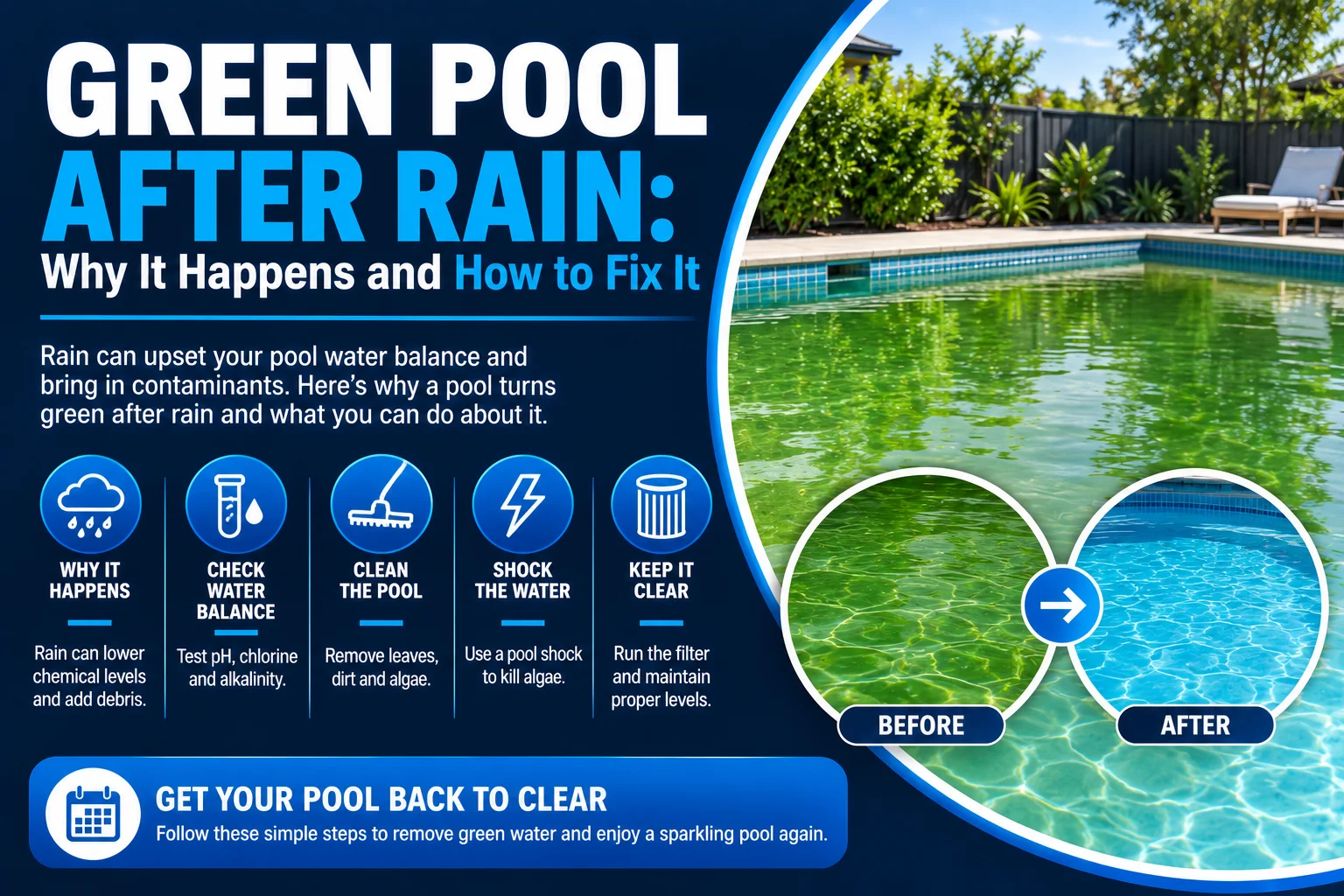
Rain affects your pool in several ways simultaneously, and it is the combination of these factors (not any single one) that causes the green algae bloom.
Chlorine dilution. Rainwater contains zero chlorine. A heavy downpour adds hundreds or thousands of litres of unchlorinated water to your pool, diluting your existing free chlorine concentration. When free chlorine drops below 1 ppm (parts per million), algae spores that are always present in outdoor pools begin to multiply.
pH crash. Rainwater in Sydney is slightly acidic, typically between pH 5.0 and 5.6. Your pool should sit between pH 7.2 and 7.6. A large volume of acidic rainwater pushes your pool pH downward, which affects how effectively your remaining chlorine works and creates conditions that favour algae growth.
Alkalinity drop. Total alkalinity acts as a buffer that keeps your pH stable. Rain dilutes alkalinity the same way it dilutes chlorine, making your pH even more volatile and harder to correct until alkalinity is restored.
Organic contamination. Rain washes leaves, soil, mulch, grass clippings, pollen, dust, bird droppings, and insects into your pool. Every piece of organic matter consumes chlorine as it breaks down, accelerating the chlorine depletion that rain already started. It also introduces phosphates, which are a primary food source for algae.
Phosphate loading. Phosphates wash into your pool from garden fertiliser runoff, soil, decomposing leaves, and even the rainwater itself (which picks up phosphates from the atmosphere and roof surfaces). Algae feed on phosphates. A pool with high phosphate levels will turn green faster and resist treatment longer than a pool with low phosphates.
Filtration overload. Heavy rain raises the water level above the skimmer box opening, reducing or stopping surface skimming entirely. Debris sits on the surface and sinks instead of being captured by the skimmer. The filter has to work harder to process water that is now full of fine particles, and if the filter is already due for a clean, it cannot keep up.
How Fast Can a Pool Turn Green After Rain?
The timeline depends on the pool’s chlorine level before the rain, the volume and duration of the rainfall, and how much organic debris washes in.
Within 24 hours. A pool with low chlorine before the rain (below 2 ppm) that receives a heavy downpour with significant debris can show visible green tinting within 24 hours. This is particularly common when the pool pump was off during the storm.
24 to 48 hours. A pool with adequate chlorine (2 to 3 ppm) before the rain may hold for the first day but develop a green haze by the second day as the diluted chlorine is consumed by organic matter. This is the most common scenario after a Sydney summer storm.
48 to 72 hours. If no corrective action is taken after the initial green tinting appears, the algae population doubles rapidly. What started as a slight haze becomes a fully opaque green pool that you cannot see the bottom of. At this stage, a simple chlorine top-up is no longer enough. The pool needs a full green pool treatment.
The Difference Between Light Green, Dark Green, and Black Green
Not all green pools are the same. The colour tells you how far the algae bloom has progressed and what level of treatment is required.
Light green or green tint. The pool has a slight green hue but you can still see the bottom. Algae growth has started but is in the early stages. This can usually be corrected with shock chlorination, pH adjustment, and running the filter continuously for 24 to 48 hours.
Dark green. The pool is visibly green throughout and you cannot see the bottom in the deep end. Algae growth is well established. This requires a stronger shock treatment, manual brushing of all surfaces, extended filtration, and likely multiple backwash cycles. A pool drain and clean may be the faster option if the contamination is heavy.
Black green or swamp green. The water is opaque, dark green to black, and may have a foul smell. The algae bloom is severe, organic decomposition is occurring, and the pool’s chemistry is completely out of balance. This level of contamination requires professional green pool treatment with industrial-grade chemicals, manual debris removal, potential acid washing of surfaces, and thorough equipment inspection. Attempting to treat a black green pool without experience often leads to wasted chemicals and delayed results.
Step-by-Step: What to Do When Your Pool Turns Green After Rain
Step 1: Remove debris manually. Before adding any chemicals, use a leaf rake and pool net to remove as much floating and sunken debris as possible. Leaves and organic matter on the pool floor will continue consuming chlorine faster than you can add it. The less organic material in the water, the faster your chemical treatment will work.
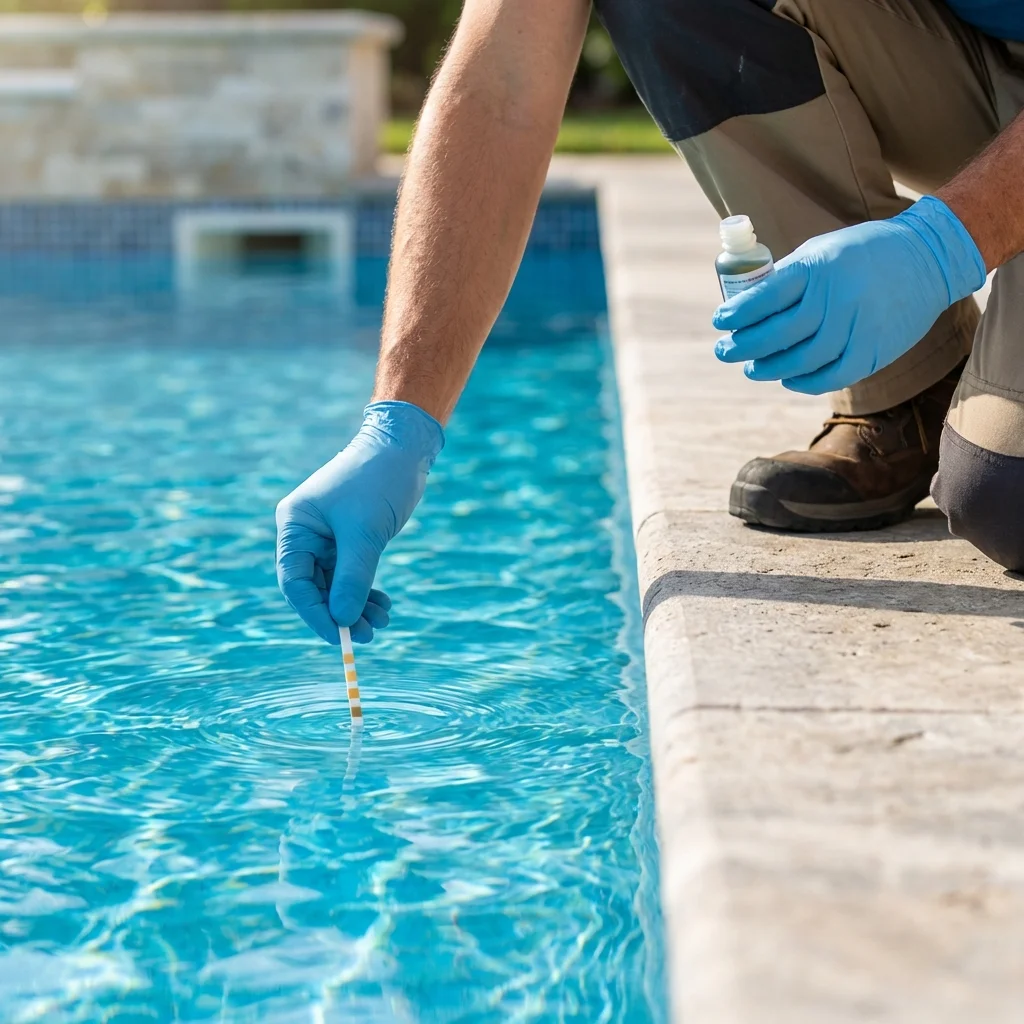
Step 2: Test your water chemistry. Test for free chlorine, pH, total alkalinity, and if possible, phosphates. After rain, you will typically find chlorine near zero, pH below 7.0, and alkalinity below 80 ppm. These numbers tell you how much correction is needed.
Step 3: Adjust pH and alkalinity first. If pH is below 7.2, add sodium bicarbonate (bicarb soda) to raise alkalinity, which will help stabilise pH. Bringing pH into the 7.2 to 7.6 range before shocking ensures the chlorine you add will work at maximum efficiency. Adding chlorine to water with a pH of 6.5 wastes up to half its sanitising power.
Step 4: Shock the pool. Add granular chlorine (calcium hypochlorite) or liquid chlorine (sodium hypochlorite) to raise free chlorine to 10 to 15 ppm for a standard green pool, or 20 to 30 ppm for a dark green pool. This is called superchlorination or shock treatment. Add the chlorine in the late afternoon or evening, as UV light from the sun breaks down chlorine rapidly.
Step 5: Brush all pool surfaces. Use a pool brush to scrub the walls, floor, steps, and any crevices where algae cling. Algae attach to surfaces and form a protective layer that chlorine alone cannot penetrate. Brushing breaks this layer and exposes the algae to the chlorine in the water.
Step 6: Run the filter continuously. Keep the pump and filter running 24 hours a day until the water clears. Backwash the filter every 8 to 12 hours (or when filter pressure rises by 8 to 10 psi above clean starting pressure). Dead algae are captured by the filter, so frequent backwashing prevents it from clogging and losing circulation.
Step 7: Add clarifier (optional but effective). A pool clarifier coagulates fine particles that make the water cloudy even after the algae have been killed. The clarifier clumps these particles together so the filter can capture them. This step speeds up the clearing process from days to hours in some cases.
Step 8: Retest and balance. After 24 to 48 hours, retest the water. Free chlorine should have dropped from shock levels but remain above 3 ppm. If it has dropped back to zero, the algae are still consuming it, and you need to shock again. Once the water is clear and holding chlorine, adjust pH, alkalinity, and stabiliser (cyanuric acid) to their normal ranges.
Why Some Pools Turn Green After Rain and Others Do Not
Two pools side by side can receive the same rain and produce completely different results. The difference comes down to preparation and maintenance.
Pools that stay clear typically have chlorine levels at the higher end of the range (3 to 5 ppm) before the storm, clean and functioning filters, low phosphate levels, regular pool cleaning and maintenance, good surface condition with no rough areas where algae can anchor, and working pool covers or leaf nets that reduce debris entry during rain.
Pools that turn green typically had chlorine already drifting low before the rain, a filter that was overdue for cleaning or backwashing, high phosphate levels from garden runoff or accumulated organic matter, damaged or rough pool surfaces that harbour algae (common on older painted, pebblecrete, or tiled surfaces with deteriorating grout), and no cover or leaf protection during the storm.
This is why regular pool maintenance between storms is the most effective green pool prevention strategy.
How Rain Affects Different Pool Surface Types
Your pool’s surface condition plays a direct role in how quickly algae establish after rain.
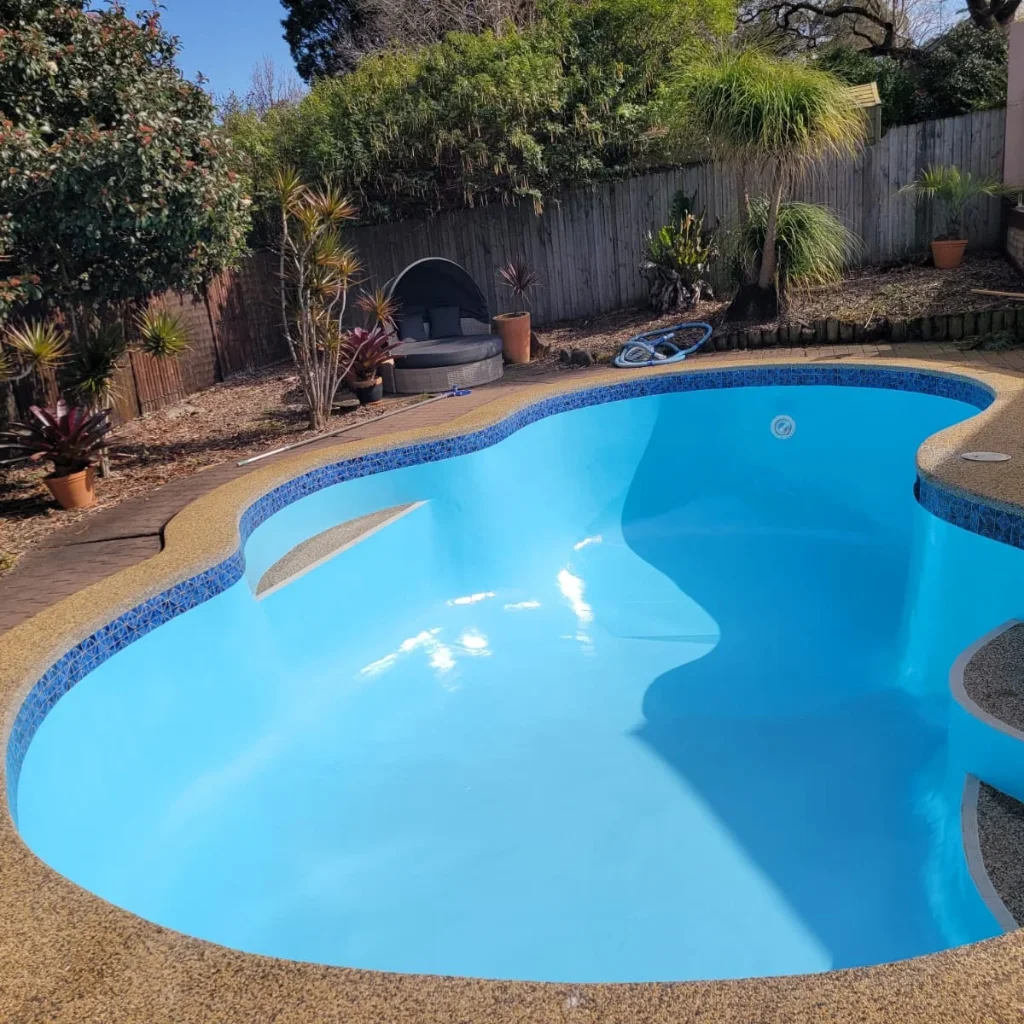
Painted pools. A smooth, well-maintained painted surface resists algae because there are few anchor points. However, if the paint is peeling, blistering, or chalking, the rough exposed areas become ideal for algae to grip. If your painted pool turns green repeatedly after rain despite good chemistry, the paint may need to be stripped and recoated. Read how often a pool should be resurfaced for the timeline on painted surfaces.
Pebblecrete and exposed aggregate. These surfaces are textured by design, which means algae have more surface area to attach to. Pebblecrete pools that are aging and losing their smooth sealer coat are particularly susceptible to green algae after rain. The solution is either acid washing to remove embedded algae or resurfacing when the pebblecrete has deteriorated beyond cleaning.
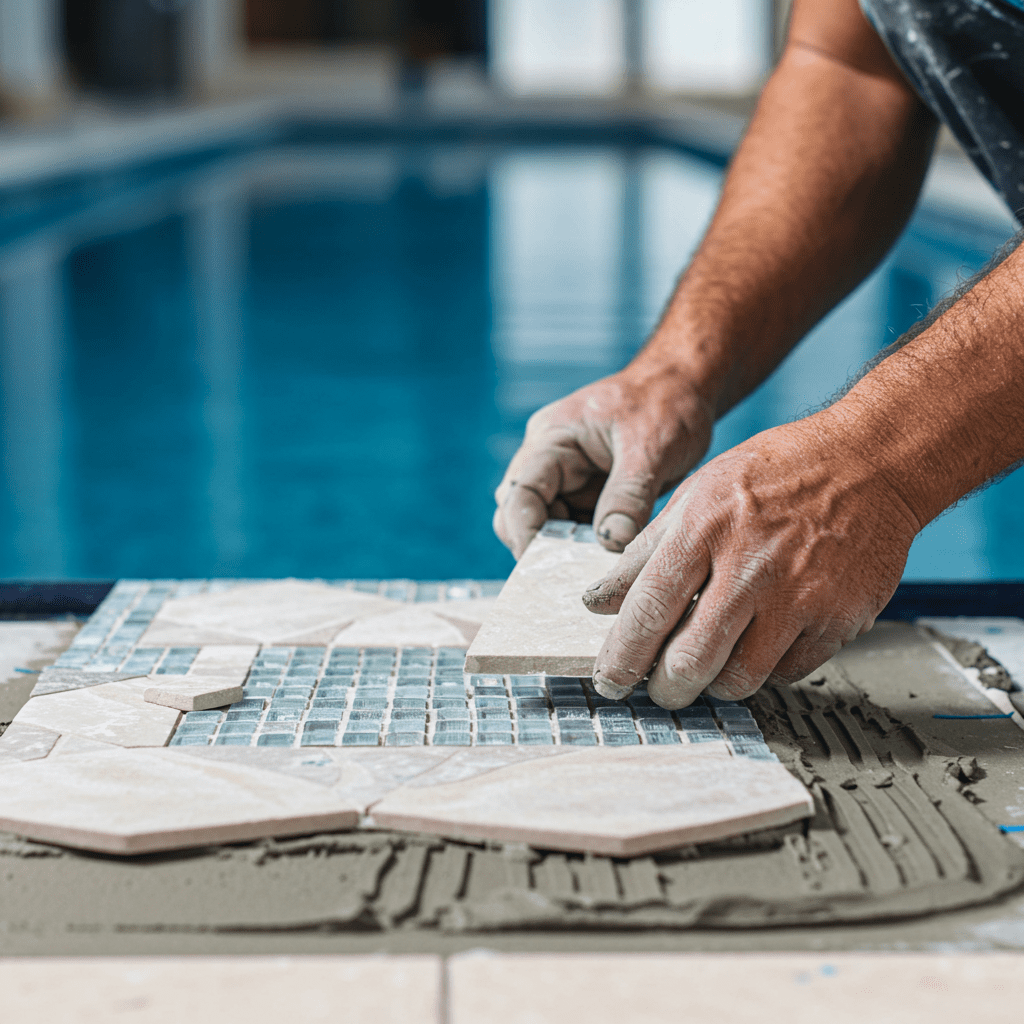
Tiled pools. Tiles themselves resist algae well, but the grout lines between tiles are porous and can harbour algae spores. If tiles are loose or falling off, the exposed substrate behind them is rough concrete that algae colonise rapidly. Keeping waterline tiles in good condition and grout sealed reduces the risk.
Fibreglass pools. The gelcoat surface of a fibreglass pool is the smoothest option and generally the most resistant to algae. However, if the gelcoat has blistered or crazed (fine surface cracking), those imperfections trap algae. Fibreglass resurfacing restores the smooth finish and the algae resistance.
Preventing a Green Pool Before the Next Storm
Prevention is cheaper, faster, and less stressful than treatment. Before storm season (and before any forecast heavy rain):
Raise chlorine to 4 to 5 ppm 24 hours before the rain is expected. This gives you a buffer so that even after dilution, your chlorine stays above the minimum effective level.
Clean or backwash your filter so it has maximum capacity to handle the debris and particle load that rain brings.
Lower the water level by 50 to 100mm below the normal operating level. This creates room for the rainwater without raising the level above the skimmer opening.
Trim overhanging trees and vegetation that will drop leaves and debris into the pool during wind and rain.
Add a phosphate remover if your phosphate levels are above 300 ppb. Removing the food source makes it harder for algae to bloom even if chlorine dips temporarily.
Check your pool cover or leaf net. A solid cover keeps rain and debris out entirely. A leaf net allows rain through but catches the organic matter. Either one dramatically reduces the post-rain workload. If you do not have a cover, this single investment prevents more green pool episodes than any chemical treatment.
Ensure the pool surface is in good condition. If your pool surface is due for resurfacing or painting, a smooth new surface removes the microscopic crevices where algae survive between chemical treatments.
When to Call a Professional Instead of Treating It Yourself
You can handle a light green pool yourself if you have a test kit, the right chemicals, and a functioning filter system. Call a professional when:
- The pool is dark green or black and you cannot see the bottom
- You have shocked the pool twice and it is still not clearing
- The filter pressure is not dropping even after backwashing (the filter may need servicing or replacing)
- You suspect the pump, chlorinator, or other equipment is not working properly
- The pool has been green for more than a week, as surface staining becomes harder to remove the longer algae sit on the surface
- You notice the pool is also losing water, which may indicate a leak compounding the problem
Advance Pool Painting provides green pool treatment with a 48 to 72 hour turnaround across all Sydney service areas. Contact us for a free pool assessment.