When Does a Pool Need Draining and Cleaning?
Not every pool problem requires a full drain. Chemical treatment, filtration, and regular pool cleaning handle most ongoing maintenance issues. A drain and clean is the solution when those approaches have reached their limit.
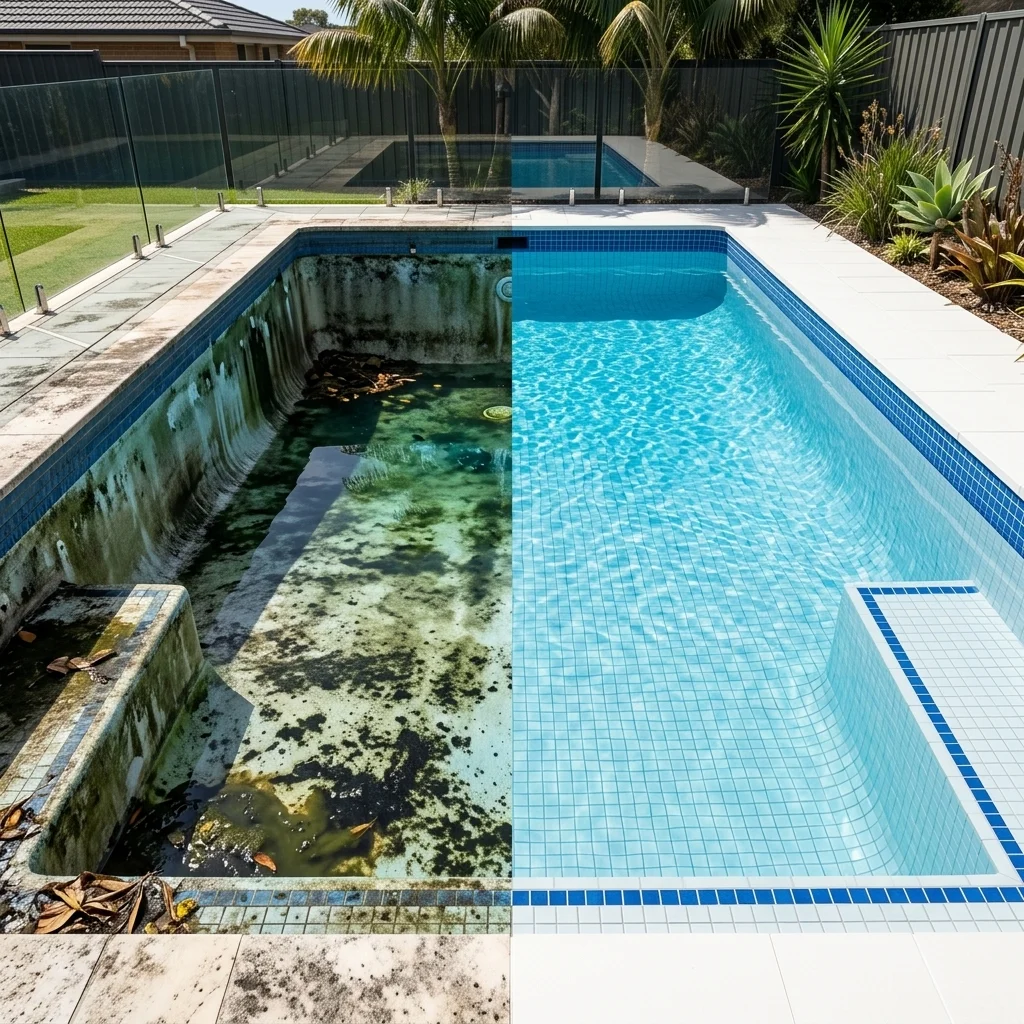
Severe algae that has embedded in the surface. A green pool can often be recovered with chemical shock treatment and filtration. But when black or mustard algae has penetrated into porous surfaces like pebblecrete or rendered concrete, the roots survive chemical treatment and regrow within days. The only way to fully eliminate embedded algae is to drain the pool, scrub the surface, and treat it directly. For initial green pool recovery attempts, the green pool treatment guide covers the chemical approach.
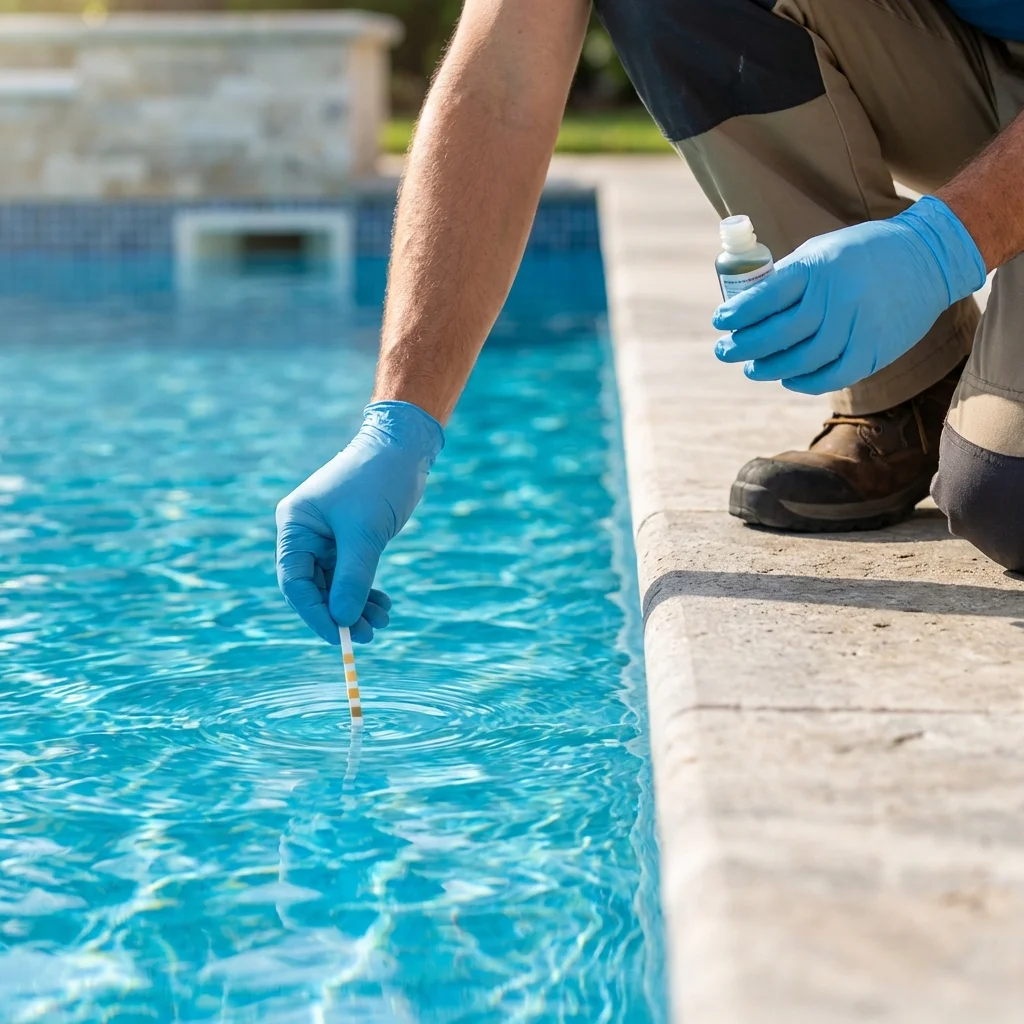
Total dissolved solids (TDS) beyond recovery. Over years of topping up evaporated water and adding chemicals, the total dissolved solids in pool water climb steadily. Once TDS exceeds manageable levels (typically above 3,000 ppm), the water becomes difficult to balance, looks dull regardless of chemical treatment, and feels uncomfortable to swim in. A drain and refill is the only way to reset TDS to zero.
Heavy calcium and mineral scale buildup. Calcium deposits on tiles, grout, and pool surfaces can be treated in-water to a point, but heavy scale that has built up over years requires draining so the deposits can be physically removed through scrubbing or acid washing.
Extended neglect. A pool that has been sitting unused for months or years, filled with debris, leaves, and stagnant water, is not recoverable through filtration. It needs a complete drain, clean, and fresh start.
Before any renovation work. Every pool resurfacing, painting, tiling, or crack repair project starts with draining and cleaning the pool. The interior surface must be completely exposed, clean, and dry before any new finish can be applied.
“About half the pools we drain for cleaning reveal surface damage the owner did not know about. Cracks, delamination, and worn pebblecrete that were hidden under water become obvious once the pool is empty. That is why a drain and clean is also the best diagnostic tool for your pool’s condition.”
The Pool Drain and Clean Process
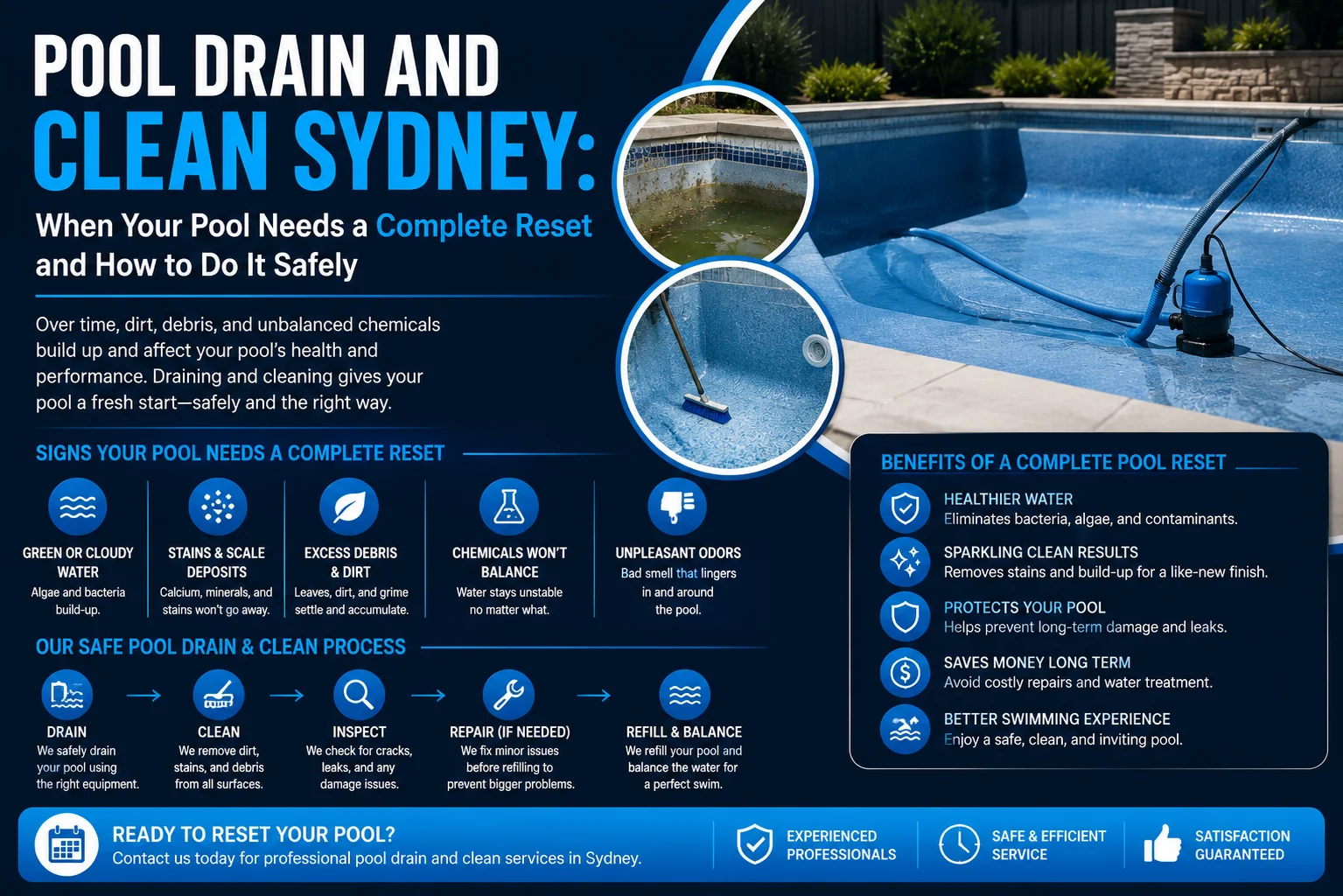
A professional drain and clean follows a specific sequence to protect the pool structure and deliver a thorough result.
Step one: Pre-drain assessment. Before any water is removed, the pool’s structural condition is assessed. This includes checking for visible cracks, noting the water table level (relevant for pools in low-lying or coastal areas), and confirming that the drainage point can handle the discharged water without flooding neighbouring properties.
Step two: Controlled draining. The pool is drained using a submersible pump. Draining must be done at a controlled rate because removing water too quickly can create hydrostatic pressure imbalance. In areas with a high water table, the pressure from groundwater beneath the pool can push an empty shell upward (a phenomenon called “pool pop”), cracking or displacing the entire structure. This is particularly relevant for pools in suburbs near the harbour, rivers, or in low-lying areas across Western Sydney and Southern Sydney.
Step three: Debris removal. Once drained, all leaves, sludge, sediment, and debris are removed from the pool floor and walls.
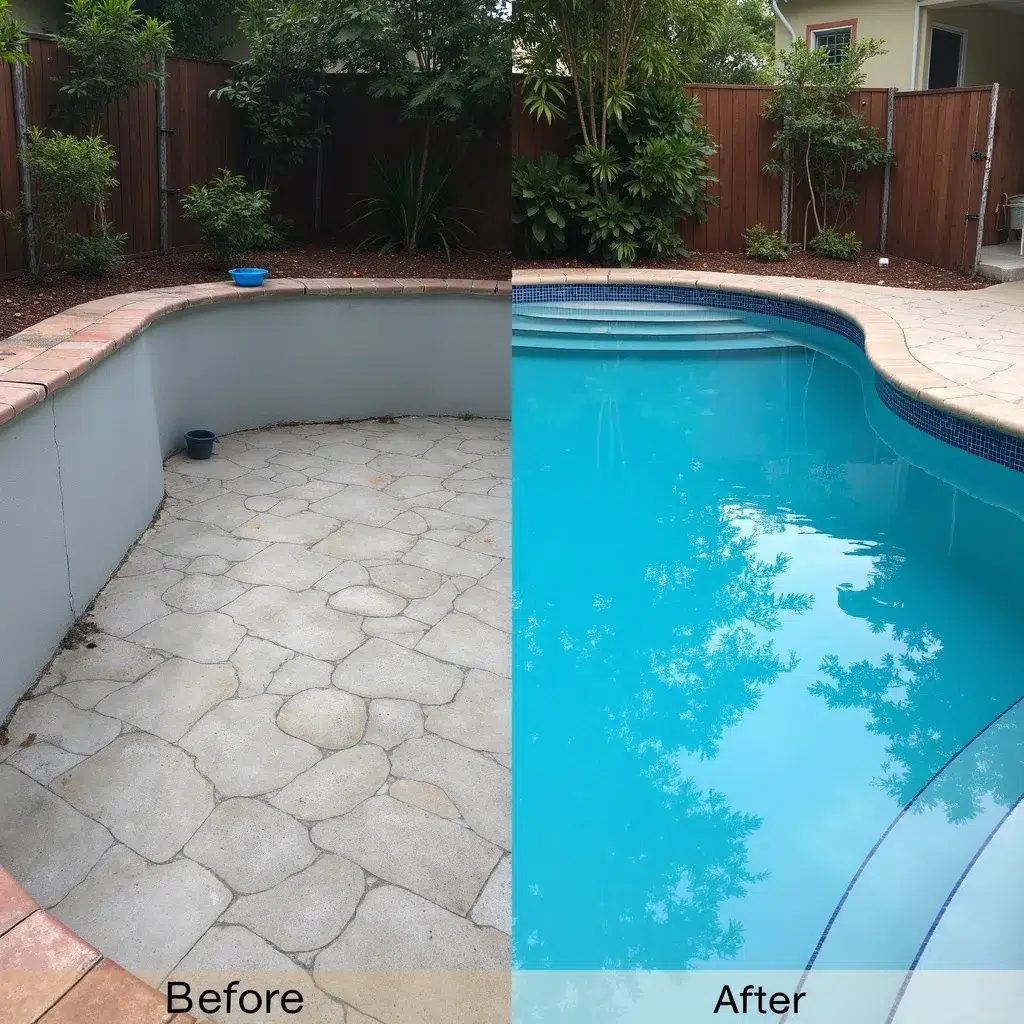
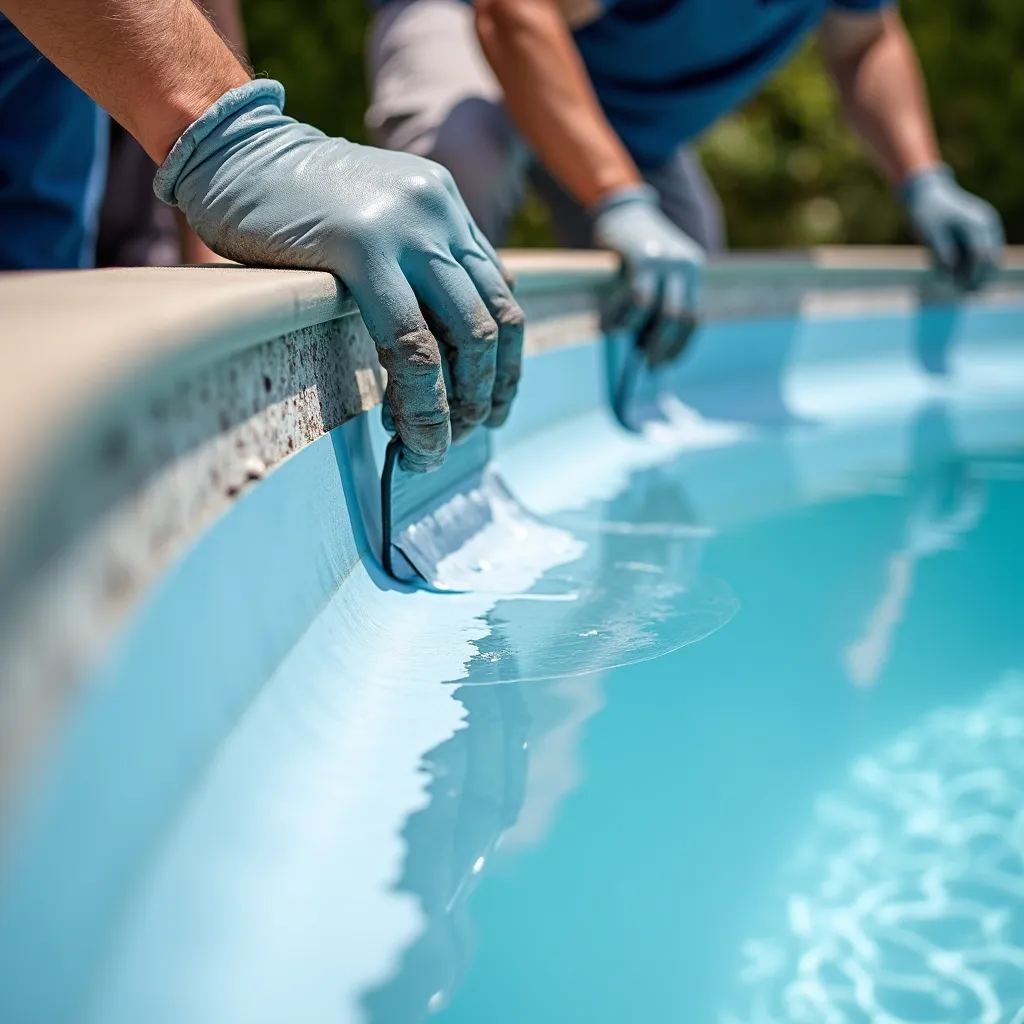
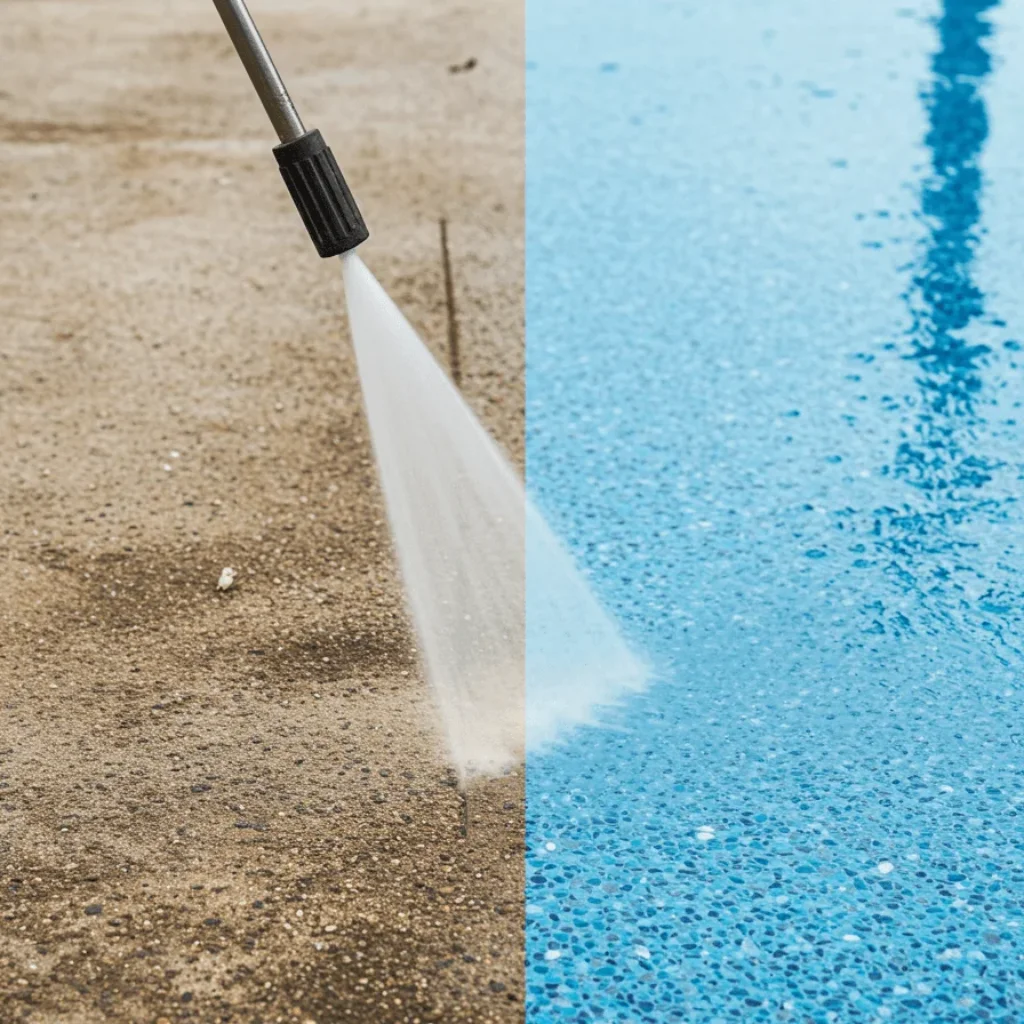
Step four: Surface cleaning. The interior shell is pressure cleaned to remove algae, scale, staining, and surface contamination. For heavily stained or scaled surfaces, acid washing is applied to dissolve mineral deposits and restore the surface appearance.
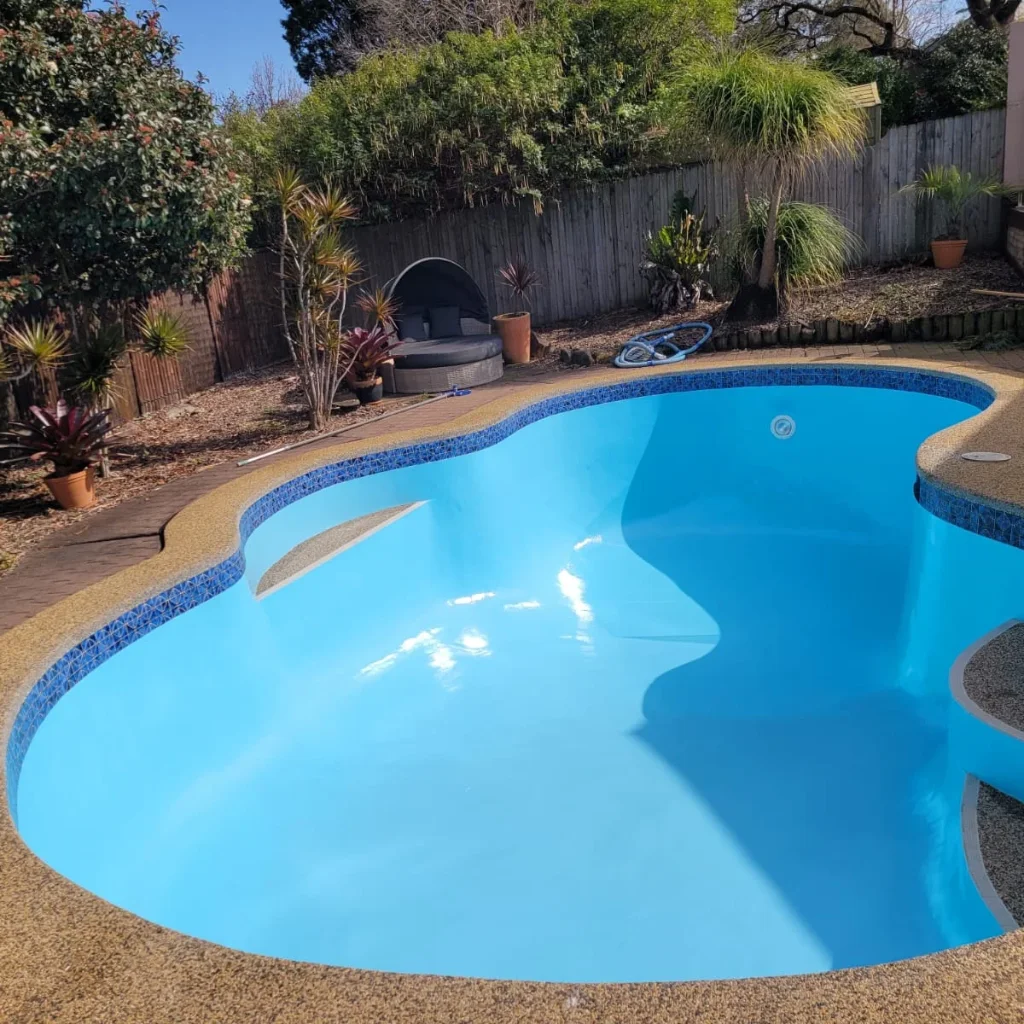
Step five: Surface inspection. With the pool empty and clean, the interior surface is thoroughly inspected for cracks, delamination, hollow spots, worn pebblecrete, peeling paint, and any structural issues that were hidden under water. This is a critical step because it determines whether the pool can simply be refilled or whether resurfacing, crack repair, or waterproofing is needed first.
Step six: Equipment check. While the pool is empty, the plumbing, fittings, return jets, skimmer box, main drain, and underwater lights are inspected and serviced or replaced if needed.
Step seven: Refill and balance. The pool is refilled with fresh water, and the chemistry is balanced from scratch: pH, alkalinity, calcium hardness, stabiliser, and sanitiser levels are all set to optimal ranges.
Risks of Leaving a Pool Empty Too Long
This is one of the most important considerations during a drain and clean. A pool should never be left empty longer than absolutely necessary.
| Risk | What Happens | How to Prevent |
|---|---|---|
| Hydrostatic pressure (pool pop) | Groundwater pushes the empty shell upward, cracking or displacing it | Open the hydrostatic relief valve before draining, monitor water table, refill promptly |
| Surface damage from sun exposure | Empty concrete, pebblecrete, and rendered surfaces dry out and crack in direct sun | Schedule draining for cooler months, keep the drain-to-refill timeline as short as possible |
| Shell movement from temperature cycling | An empty pool expands and contracts with temperature changes more than a filled one | Minimise empty time, especially in summer |
| Staining from standing rainwater | Rain collecting in an empty pool leaves mineral deposits and dirt stains on the bare surface | Cover the pool or pump out rainwater promptly during the empty period |
For a detailed guide on how long a pool can safely remain empty, the topic is covered in the pool inspection assessment process.
Drain and Clean vs Green Pool Treatment: Which Do You Need?
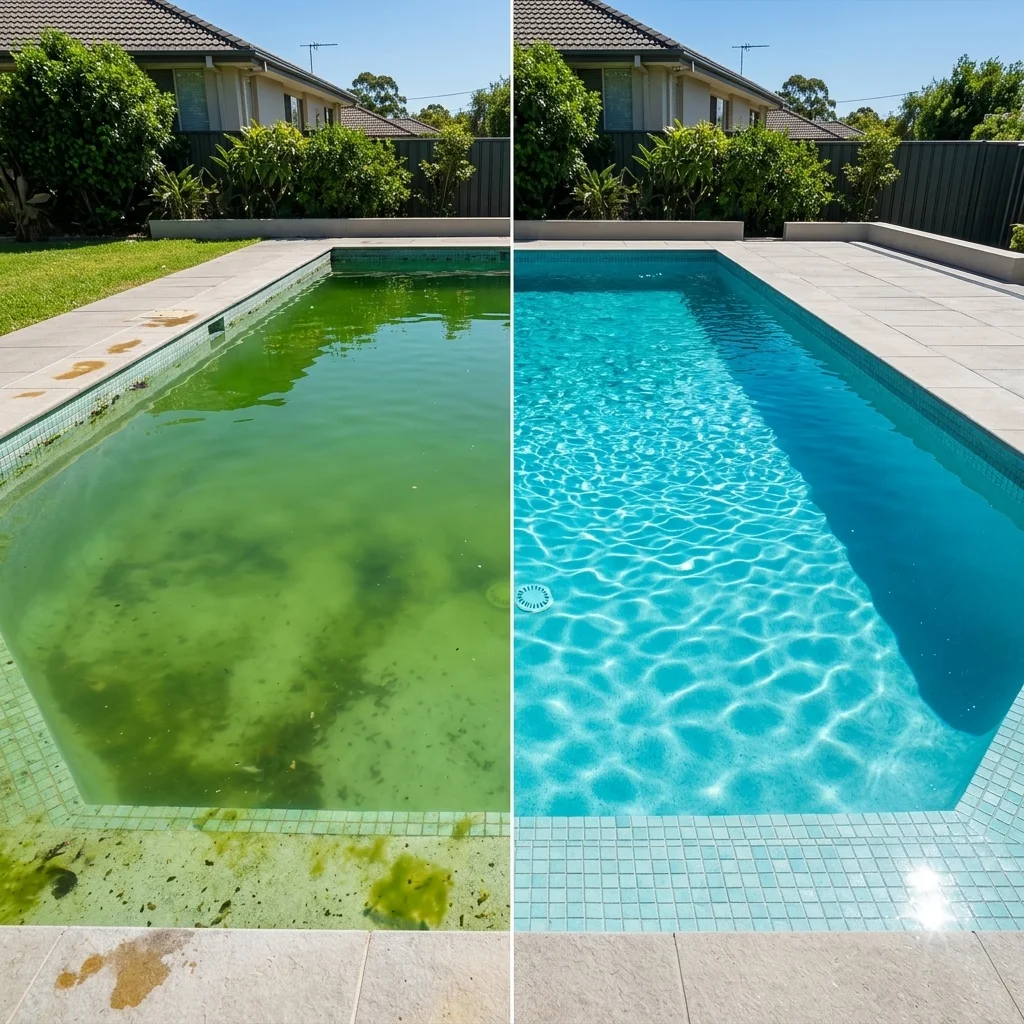
Not every green pool needs draining. Understanding the difference saves you money and downtime.
| Scenario | Best Approach |
|---|---|
| Pool turned green recently (days to a couple of weeks), filter is operational | Green pool treatment with chemical shock and filtration. No drain needed. |
| Green pool with heavy debris, dead animals, or months of neglect | Drain and clean. The water and debris volume is beyond what filtration can handle. |
| Green pool that has been treated chemically but algae keeps returning | Drain and clean. Algae has likely embedded in the porous surface and needs physical removal. |
| Pool water is clear but looks dull, feels rough, or will not balance despite chemicals | Drain and refill. TDS is too high for chemical correction. |
| Pool needs resurfacing, painting, or tiling | Drain and clean as part of the renovation project. |
What a Drain and Clean Often Reveals
One of the most valuable outcomes of draining a pool is what it shows you about the pool’s condition beneath the water.
Surface wear you could not see. Worn pebblecrete, faded paint, rough render, and delaminating patches are invisible under water but obvious once the pool is empty. If the surface has deteriorated, this is the ideal time to plan a resurfacing with pebblecrete, concrete resurfacing, or a fresh coat of Luxapool epoxy paint.
Cracks and structural movement. Hairline cracks, expansion cracks, and structural movement are clearly visible on a dry, clean surface. Pool crack repair is far more effective when done on a dry shell than attempting underwater repairs.
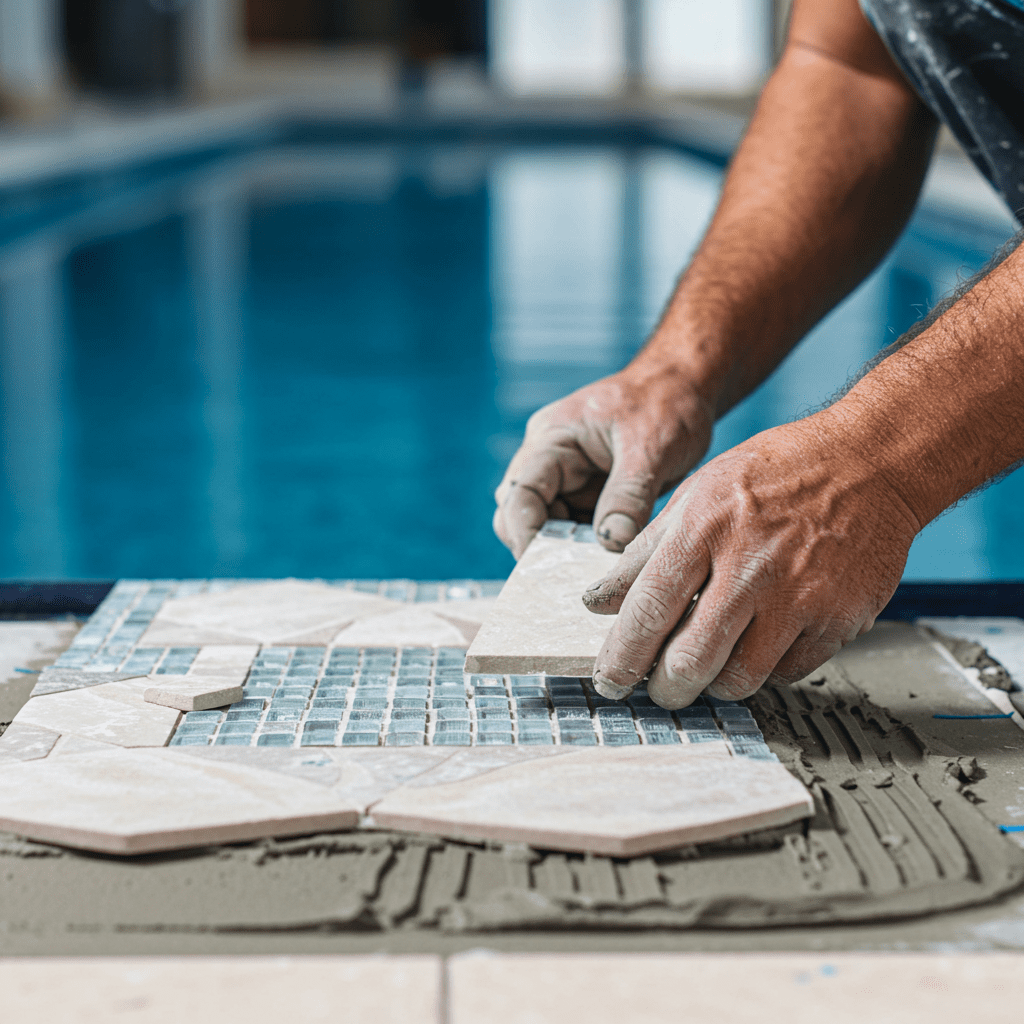
Tile and grout failure. Loose waterline tiles, crumbling grout, and delaminated tiles around the waterline are easily identified and repaired during the empty period. Pool retiling is best done while the pool is already drained.
Plumbing and fitting condition. Return jets, skimmer boxes, main drains, and plumbing connections can be fully inspected, pressure tested, and repaired while the pool is empty.
This is why combining a drain and clean with a broader pool renovation is the most cost-effective approach. The pool is already empty, the surface is already exposed, and addressing everything in one project avoids the cost of draining and refilling multiple times.
For overall renovation budgeting, the pool renovation cost guide covers what to expect.