Is It Evaporation or a Leak?
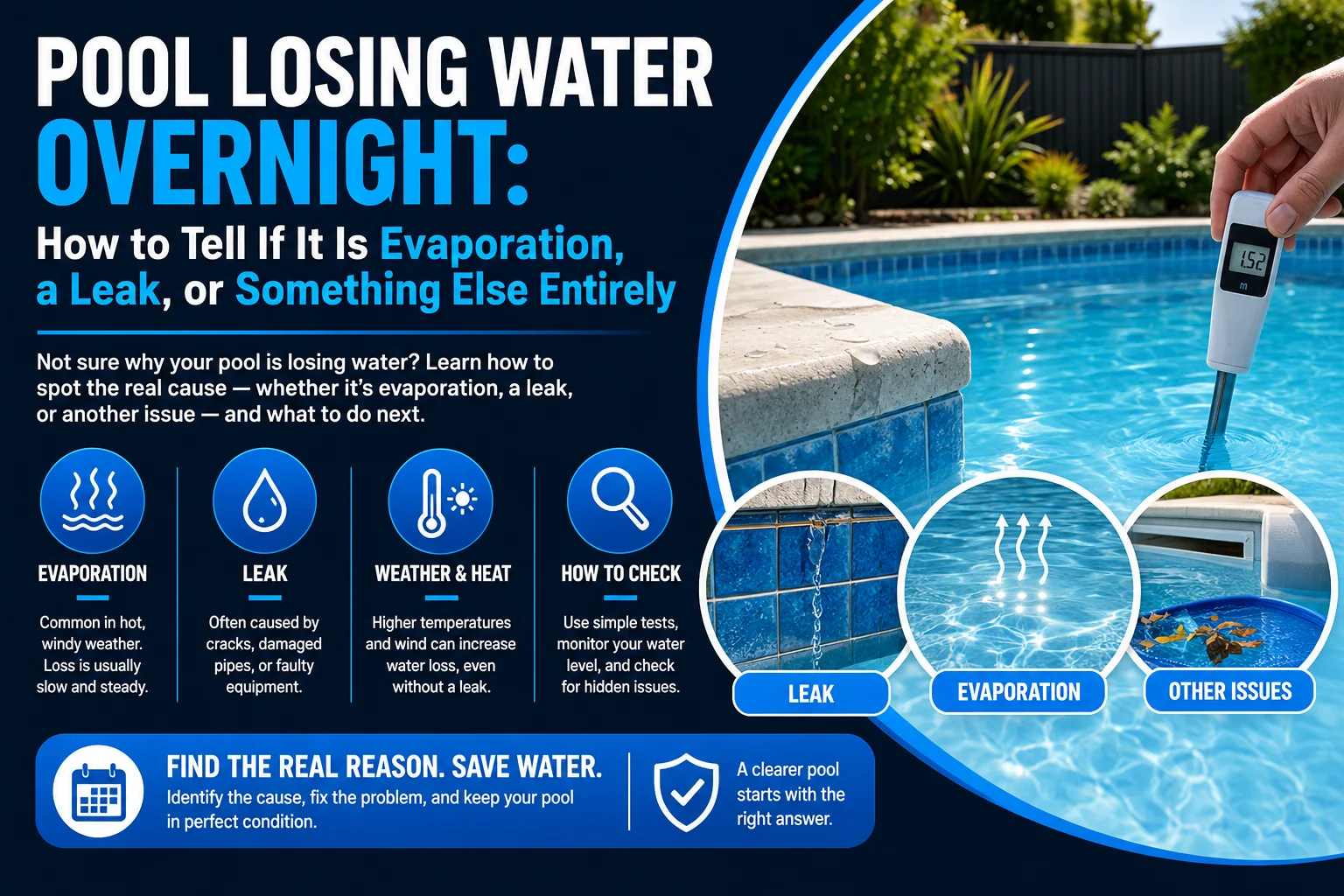
This is the first question every pool owner needs to answer, because the response is completely different.
Normal evaporation rates in Sydney:
| Season | Daily Evaporation Rate | Weekly Water Drop |
|---|---|---|
| Summer (hot, windy, low humidity) | 5 to 7mm per day | 35 to 50mm per week |
| Spring and autumn (moderate) | 3 to 5mm per day | 20 to 35mm per week |
| Winter (cool, calm, higher humidity) | 1 to 3mm per day | 7 to 20mm per week |
These rates can increase significantly on very hot, windy days (evaporation can spike to 10mm+ in a single day during a Sydney heatwave) and decrease on cool, humid, still days. A pool cover reduces evaporation by up to 90 percent.
If your pool is losing water at a rate that matches these ranges and varies with the weather (more loss on hot days, less on cool days), evaporation is the most likely explanation.
If your pool is losing water at a rate that exceeds these ranges consistently, or if the loss continues at the same rate regardless of weather, temperature, or whether the pool is covered, a leak is the most likely cause.
“The question we get most often is ‘how do I know if it is a leak?’ The simplest answer is this: evaporation varies with the weather. A leak does not. If your pool loses the same amount of water on a cool, calm winter day as it does on a hot, windy summer day, that is not evaporation.”
The Bucket Test: A Simple Diagnostic
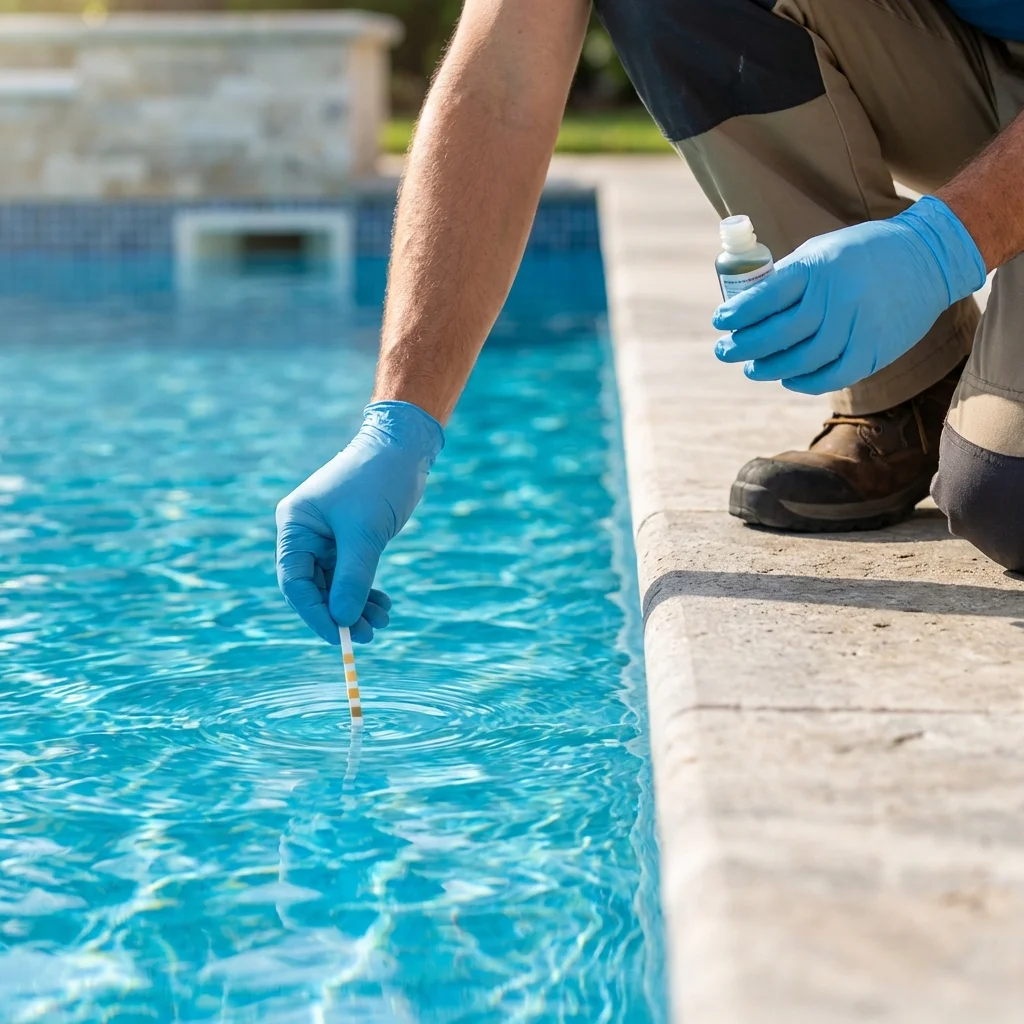
The bucket test is the standard DIY method for distinguishing evaporation from a leak. It works by comparing evaporation from a bucket of water sitting on the pool step with the water loss from the pool itself. Both are exposed to the same temperature, wind, and humidity, so evaporation should be equal. Any difference is water being lost through a leak.
How to perform the bucket test:
Fill a bucket three-quarters full with pool water and place it on the top step of the pool, partially submerged so the water temperature equalises. Mark the water level inside the bucket and the pool water level on the outside of the bucket (or on the pool wall using tape). Leave both undisturbed for 24 hours with no swimming, no topping up, and no backwashing. After 24 hours, compare the two marks.
Interpreting the results:
If the pool water level has dropped more than the bucket water level, the pool is losing water to something other than evaporation. The difference between the two measurements indicates how much water the pool is losing per day beyond normal evaporation.
If both levels have dropped by the same amount, the water loss is evaporation only and there is no leak.
Repeat the test over two to three days for a more reliable result, as a single day can be affected by wind gusts, splashing, or other variables.
If the bucket test confirms a leak, the next step is professional pool leak detection to locate the exact source.
Where Pool Leaks Actually Hide
Pool leaks can originate from the shell, the plumbing, the equipment, or the fittings. Knowing where leaks commonly occur helps you and your leak detection specialist narrow down the source.
| Leak Location | What Fails | What You Might Notice |
|---|---|---|
| Pool shell (cracks) | Concrete cracks from ground movement, settlement, or age | Water loss continues when pump is off, wet soil on one side of the pool, visible cracks on the drained surface |
| Pool shell (surface) | Failed render, peeling paint, delaminated pebblecrete, or deteriorated waterproofing membrane | Water loss is slow but steady, surface feels rough or hollow in spots |
| Skimmer box | Cracked skimmer body or failed seal between skimmer and pool wall | Water level stabilises at the bottom of the skimmer opening, wet soil near the skimmer |
| Return jets and fittings | Failed gaskets, cracked fittings, loose connections | Wet soil near return jet locations, air bubbles from returns when pump runs |
| Main drain | Cracked drain sump or failed seal around the drain | Water loss continues even when skimmer line is plugged |
| Plumbing (underground pipes) | Cracked or separated pipes from ground movement, age, or root intrusion | Water loss continues when pump is off, wet areas in the yard along pipe runs |
| Equipment (pump, filter, heater) | Failed seals, cracked housings, loose unions | Visible dripping or pooling water around equipment pad |
| Waterline tiles and grout | Failed grout allowing water behind tiles and through the shell | Water level stabilises at the waterline tile level, water loss stops when level drops below the tiles |
A professional leak detection service uses pressure testing, dye testing, electronic listening equipment, and thermal imaging to pinpoint the exact leak location without guessing or unnecessary excavation.
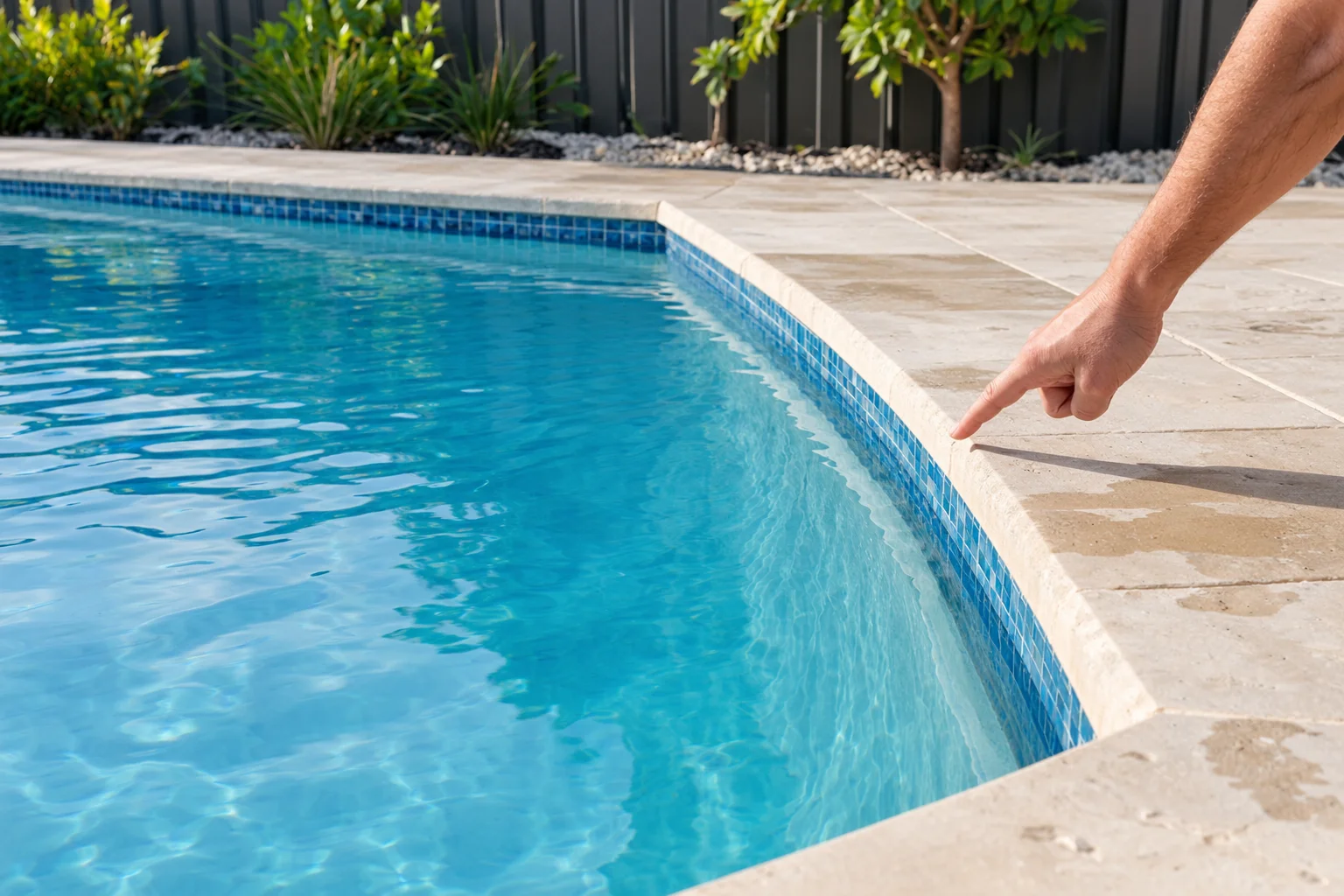
The Water Level Clue: Where the Level Stabilises Tells You Where the Leak Is
One of the most useful diagnostic clues is observing where the water level stops dropping. If the pool is leaking, the water level often stabilises at the height of the leak source.
Water stabilises at the skimmer level: The leak is likely in the skimmer box, the skimmer throat, or the plumbing connection at the skimmer.
Water stabilises at the waterline tile level: The leak is likely in the grout or adhesion behind the waterline tiles, or in a fitting (return jet, light) at that height.
Water stabilises at the return jet level: The leak is likely in a return jet fitting, gasket, or the plumbing connection behind it.
Water continues dropping below all fittings: The leak is in the pool shell itself (a crack in the floor or lower walls), the main drain, or the underground plumbing.
Water drops only when the pump is running: The leak is on the pressure side of the plumbing system (after the pump) or in the filter/heater connections.
Water drops only when the pump is off: The leak is on the suction side of the plumbing system (before the pump) or in the pool shell.
This observation narrows the search area significantly before any professional detection equipment is used.
What Happens If a Pool Leak Is Left Unfixed
A pool leak that continues for weeks or months causes damage that extends well beyond the water bill.
Soil erosion around the pool. Leaking water gradually washes away the backfill and soil supporting the pool shell, deck, and surrounds. Over time, this creates voids under the pool surrounds and paving that cause cracking, sinking, and trip hazards.
Deck and surround damage. As the supporting soil erodes, concrete surrounds, coping stones, and paving crack, shift, and settle unevenly. Repairing this damage adds significant cost on top of the leak repair itself.
Pool shell movement. A pool shell that has lost its supporting backfill can shift, crack further, or (in extreme cases) pop under hydrostatic pressure from groundwater. This turns a repairable crack into a major structural problem.
Increased water and chemical costs. Constantly topping up a leaking pool wastes water and dilutes the chemical balance, requiring more chemicals to maintain safe swimming conditions.
Damage to neighbouring structures. Leaking water that migrates underground can affect foundations, retaining walls, and landscaping on the property and potentially on neighbouring properties.
The pool inspection service provides a full assessment of the pool’s condition including leak indicators, surface deterioration, and structural concerns. The pool inspection cost guide covers what to expect.
How Pool Leaks Are Repaired
The repair method depends on where the leak is and how severe it is.
Shell cracks are repaired by draining the pool, opening the crack to sound concrete, and filling with a flexible structural repair compound. For significant cracking, pool crack repair may involve reinforcing the area before sealing. Once repaired, pool waterproofing is applied to prevent moisture migration through the repaired area.
Surface failures (delaminated render, peeling paint, deteriorated pebblecrete) that allow water to seep through the surface layer are addressed through resurfacing. Options include pebblecrete resurfacing, pool painting with Luxapool epoxy, or concrete resurfacing.
Fitting and skimmer leaks are repaired by replacing the failed gaskets, seals, or fittings and resealing the connection to the pool wall.
Plumbing leaks require locating the failed pipe section (often underground), excavating to access it, and replacing the damaged section. The pool plumbing repairs service covers the full process.
Equipment leaks are repaired by replacing seals, o-rings, or cracked housings on the pump, filter, or heater.
For pools where the leak is a symptom of broader surface or structural deterioration, combining leak repair with a broader pool renovation addresses the root cause and prevents new leaks developing elsewhere. The pool renovation cost guide covers what to budget for combined projects.
Other Causes of Water Loss (Not Leaks)
Before assuming a leak, rule out these common non-leak causes of water loss.
Splash-out. Active swimming, diving, water play, and pool games remove significant amounts of water. A busy family pool can lose 10 to 20mm of water in a single afternoon of play. If water loss coincides with heavy pool use and stops when the pool is not being used, splash-out is the likely cause.
Backwash and filter cleaning. Every backwash cycle sends water to waste. Frequent backwashing (more than once per week) adds up to measurable water loss over time.
Plumbing set to waste. Check that the multiport valve on the filter is not inadvertently set to the waste position, which sends all water passing through the filter directly to the drain.
Pool cleaner discharge. Some robotic and suction pool cleaners eject small amounts of water during operation. Over extended run times, this accumulates.
Evaporation spikes. A sudden increase in temperature, wind, or a drop in humidity can spike evaporation well above the normal daily rate. A single extremely hot and windy day can remove 10 to 15mm of water from an uncovered pool.