What Waterline Tiles Do and Why They Matter
Waterline tiles serve both a functional and aesthetic purpose.
Functionally, the waterline tile band protects the pool shell at its most vulnerable point. The wet-dry zone at the water surface is where chemical attack, mineral deposition, and biological growth are most concentrated. Without a durable, non-porous tile surface at this junction, the pool shell material (render, pebblecrete, or painted surface) would deteriorate rapidly from the constant cycling between wet and dry conditions.
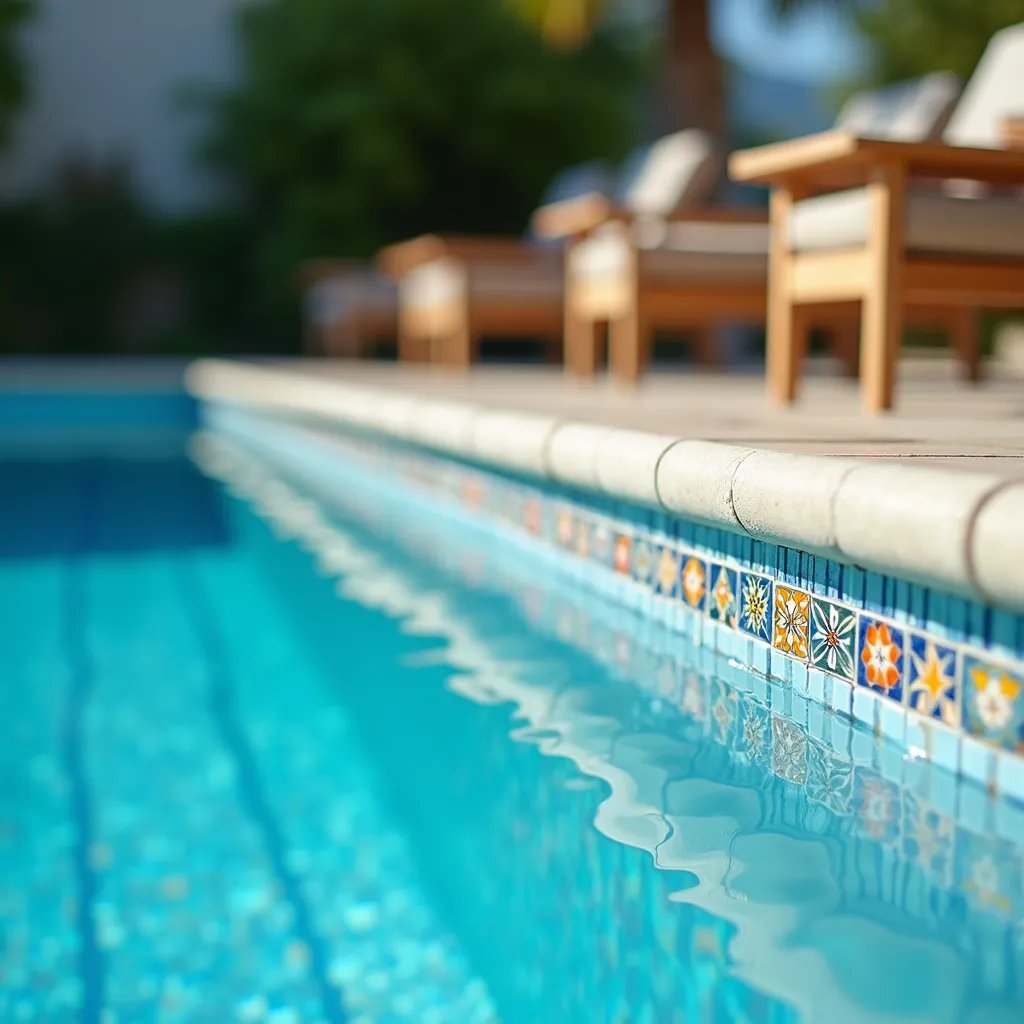
Aesthetically, the waterline tile band is the most visible part of the pool surface. It is at eye level for anyone standing at the pool edge, sitting on the coping, or swimming at the surface. A clean, sharp waterline tile band makes the entire pool look maintained and inviting. A stained, cracked, or deteriorating waterline makes even a well-maintained pool look neglected.
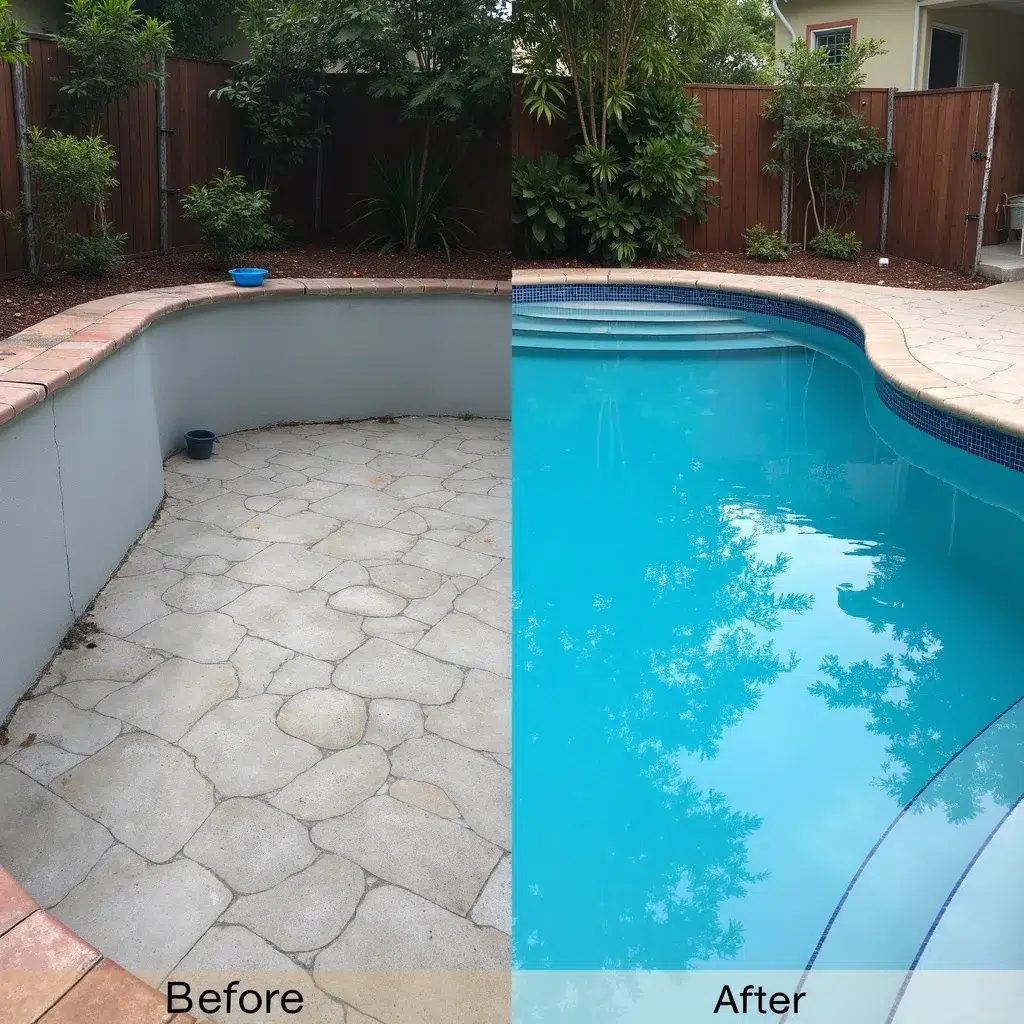
This is why waterline tile condition has a disproportionate impact on the overall appearance of the pool, and why replacing or restoring the waterline band alone can transform how the pool looks without the cost of a full retile or resurface.
Why Waterline Tiles Fail Before Everything Else
The waterline position subjects tiles to a unique combination of stresses that no other pool surface experiences.
| Stress Factor | What Happens at the Waterline | Why It Causes Damage |
|---|
| UV exposure | Tiles above and at the waterline receive direct sunlight. Submerged tiles are shielded by the water. | UV degrades grout, fades certain tile glazes, and accelerates the perishing of adhesive exposed at the top edge of the band. |
| Wet-dry cycling | The water level fluctuates daily from evaporation, splash-out, rain, and backwash. The waterline tiles cycle between wet and dry constantly. | Repeated wet-dry cycling causes salt crystallisation within porous grout and adhesive, expanding and cracking them from the inside (salt attack). |
| Chemical concentration | Pool chemicals (chlorine, salt, acid) are most concentrated at the water surface where they interact with air. | Concentrated chemical exposure attacks grout and adhesive more aggressively at the waterline than at depth. |
| Mineral deposition | Calcium, magnesium, and other minerals precipitate out of solution at the water surface and deposit on the tile and grout as a hard, white scale. | Calcium scale bonds to the tile surface and embeds in the grout, creating a rough, discoloured band that is difficult to remove without damaging the tile. |
| Oil and organic accumulation | Body oils, sunscreen, cosmetics, and organic debris float to the surface and concentrate at the waterline. | These deposits form a greasy, discoloured ring on the tile and grout that attracts dirt and resists standard cleaning. |
| Thermal cycling | Tiles at the waterline experience the full air temperature range (hot sun to cool nights) while also contacting water at a different temperature. | Thermal stress fatigues adhesive bonds and grout joints faster than tiles that remain at a stable submerged temperature. |
| Algae and biological growth | The wet-dry zone at the waterline provides the moisture, air, and light that algae and biological organisms need. | Algae establishes at the waterline before it appears elsewhere in the pool, particularly in shaded sections. |
“The waterline tile band is always the first part of the pool that looks tired. It is exposed to everything: sun, air, chemicals, minerals, oils, temperature swings, and the constant cycling between wet and dry. A pool can look ten years old at the waterline and five years old everywhere else. Replacing just the waterline band makes the entire pool look new again.”
Common Waterline Tile Problems
These are the issues most frequently identified during pool inspections and renovation consultations.
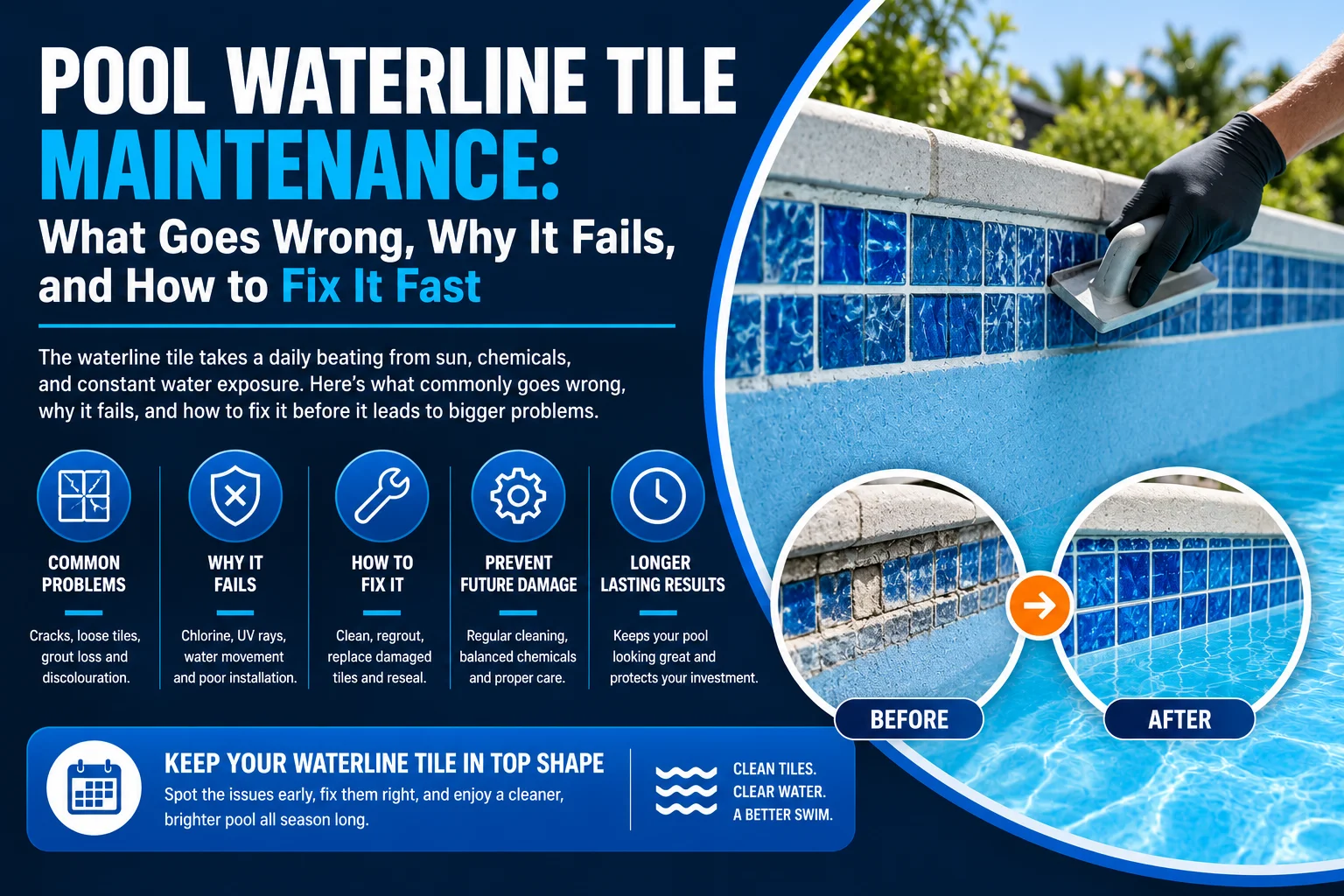
Calcium scale buildup. A white, rough, crusite deposit along the tile and grout at the waterline. Caused by high calcium hardness, high pH, or high total alkalinity in the pool water. Light scale can be removed with acid cleaning. Heavy scale that has bonded to the tile surface and embedded in the grout may require professional treatment or tile replacement if the tile surface is damaged underneath.
Grout failure. Cracking, crumbling, or missing grout between waterline tiles. Caused by chemical attack, salt crystallisation from wet-dry cycling, thermal movement, and age. Failed grout allows water behind the tiles, which undermines the adhesive bond and leads to tiles detaching. Regrouting the waterline band with pool-grade epoxy grout is the fix if the tiles themselves are sound.
Tile staining. Discoloured tiles from mineral deposits (white calcium, brown iron, blue-green copper), organic buildup (greasy grey-brown ring from oils and sunscreen), or algae (green film in shaded sections). Some staining responds to chemical cleaning and acid washing. Permanent staining embedded in the tile glaze requires tile replacement. For stain identification and treatment, read the how to remove pool stains guide.
Tile detachment. Tiles loosening or falling off at the waterline. The adhesive bond fails from the constant chemical, thermal, and wet-dry cycling at this position. Individual detached tiles can be rebonded if caught early. Widespread detachment across the waterline band indicates systemic adhesive failure requiring full waterline tile replacement.
Glaze deterioration. The glossy surface of the tile becomes dull, rough, or chalky. Caused by prolonged chemical attack (particularly from acidic water or high chlorine levels) and UV degradation. Once the glaze is compromised, the tile absorbs stains more readily and is harder to clean because the non-porous surface that protected it is gone.
Waterline Tile Material Options
When replacing the waterline tile band, the material choice affects appearance, durability, maintenance requirements, and cost.
| Material | Characteristics | Durability at the Waterline | Maintenance | Cost |
|---|
| Ceramic mosaic | Most common waterline tile. Wide colour and pattern range. Good chemical resistance. Standard 20x20mm or 25x25mm sheets. | Good. Glazed surface resists most staining. Grout joints remain the weak point. | Moderate. Regular waterline cleaning prevents buildup. Grout needs periodic inspection. | $$ |
| Porcelain mosaic | Denser and less porous than ceramic. Superior chemical and stain resistance. Lower water absorption. | Very good. Harder glaze resists chemical attack and UV better than ceramic. | Lower than ceramic. Denser surface resists staining more effectively. | $$$ |
| Glass mosaic | Non-porous surface with zero water absorption. Luminous, reflective finish. Does not fade from UV. Available in every colour. | Excellent. The best waterline tile material for durability and stain resistance. Glass does not absorb anything. | Lowest. Non-porous surface wipes clean. Scale sits on the surface rather than embedding. | $$$$ |
| Stone mosaic (travertine, marble) | Natural appearance. Each tile unique. Higher porosity than ceramic, porcelain, or glass. | Moderate. Porous surface absorbs stains and chemicals more readily. Requires sealing. | Higher. Needs periodic sealing. More susceptible to chemical etching and scale embedding. | $$$$ |
| Band tiles (single-piece border tiles) | Larger format tiles (typically 100x200mm or 150x300mm) designed specifically as waterline bands. Available in ceramic and porcelain. | Good to very good depending on material. Fewer grout joints than mosaic (less grout maintenance). | Lower than mosaic due to fewer joints. Larger tile surface is easier to clean. | $$$ |
The recommendation for most Sydney pools: Porcelain mosaic or glass mosaic for the waterline band. Both resist the waterline’s harsh conditions significantly better than ceramic, and glass in particular is virtually immune to chemical attack, UV, and staining because its surface is completely non-porous. The higher material cost is offset by the longer lifespan and lower maintenance at the position in the pool that takes the most abuse.
For the full comparison of all pool surface types, read the pool surface options guide.
Waterline Tile Replacement Process
Replacing the waterline tile band is a standalone project that does not require draining the entire pool or retiling the submerged surfaces.
Step 1: Lower the water level. The water is lowered below the bottom edge of the waterline tile band (typically 30 to 50cm below normal level). The pool does not need to be fully drained unless the submerged surface also needs work.
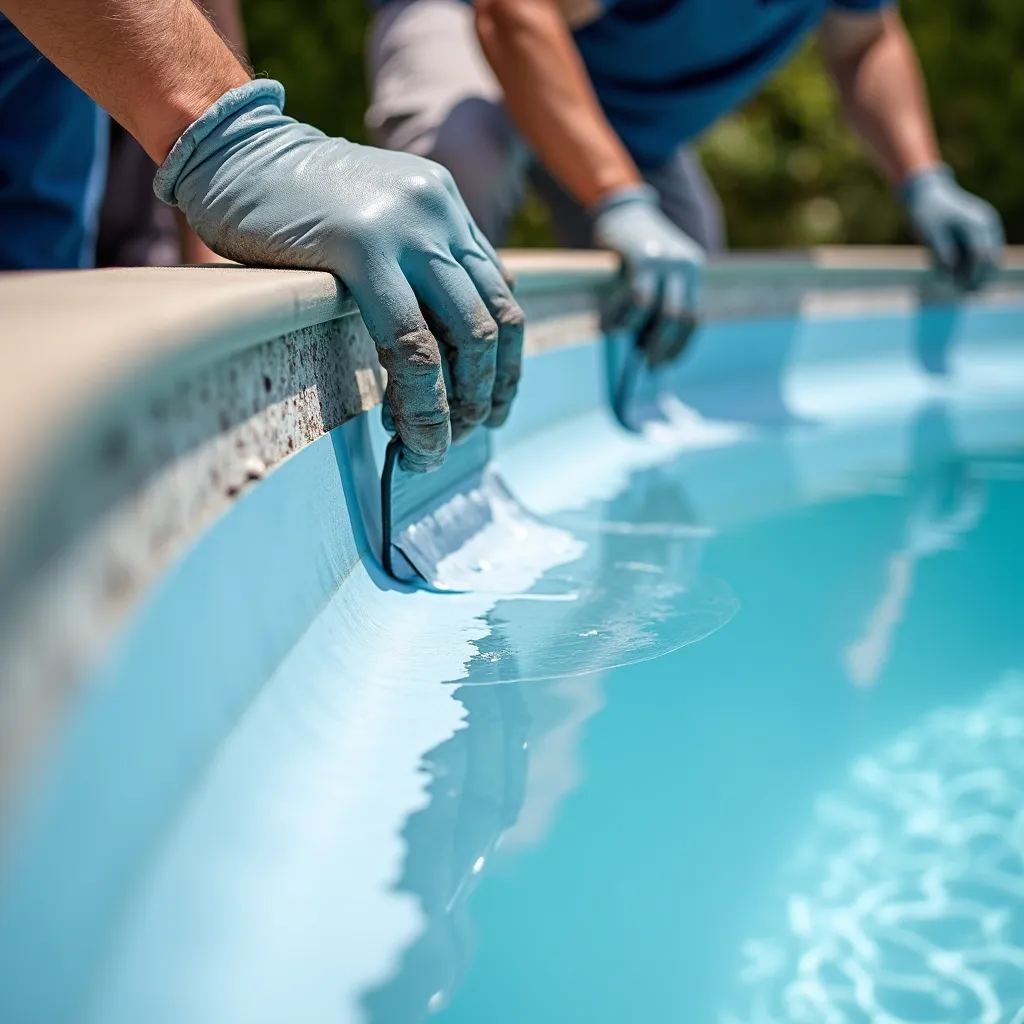
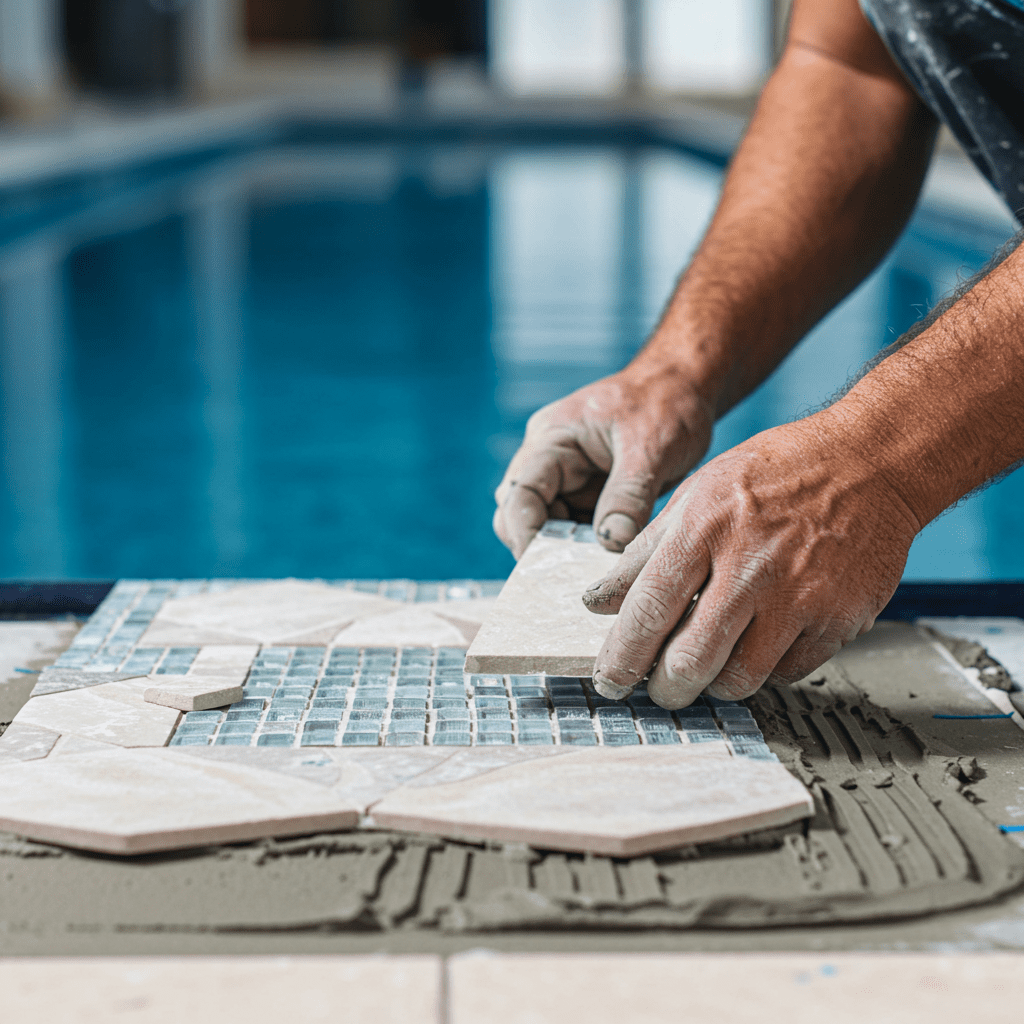
Step 2: Remove existing tiles. The old waterline tiles are carefully removed using a grinder or chisel. All old adhesive is stripped from the substrate to create a clean bonding surface.
Step 3: Prepare the substrate. The exposed substrate is inspected for cracks, render deterioration, and moisture issues. Any damage is repaired. The surface is cleaned and primed for the new adhesive.
Step 4: Waterproofing. A waterproof membrane is applied to the prepared substrate at the waterline position. This is critical because the waterline is the point of maximum water penetration risk.
Step 5: Install new tiles. New waterline tiles are set in waterproof, chemical-resistant adhesive rated for pool use. Tiles are levelled and spaced consistently.
Step 6: Grout. Joints are filled with epoxy or polymer-modified grout rated for permanent pool exposure. Pool-grade grout is essential at the waterline because standard grout deteriorates rapidly from the chemical and wet-dry cycling at this position.
Step 7: Refill and balance. The pool is refilled to normal operating level. Water chemistry is balanced and maintained. For new grout curing requirements, the pool resurfacing maintenance guide covers the startup process.
The entire project typically takes 3 to 5 days depending on the pool perimeter length and the tile material.
Maintaining Waterline Tiles
Proactive maintenance dramatically extends the life of waterline tiles and reduces the frequency of replacement.
Weekly waterline cleaning. Brush the waterline tile band with a nylon pool brush during your weekly pool maintenance. This removes the early-stage oil, sunscreen, and mineral deposits before they bond to the surface and embed in the grout. A dedicated waterline cleaning product (tile and grout cleaner formulated for pools) removes buildup that a brush alone cannot.
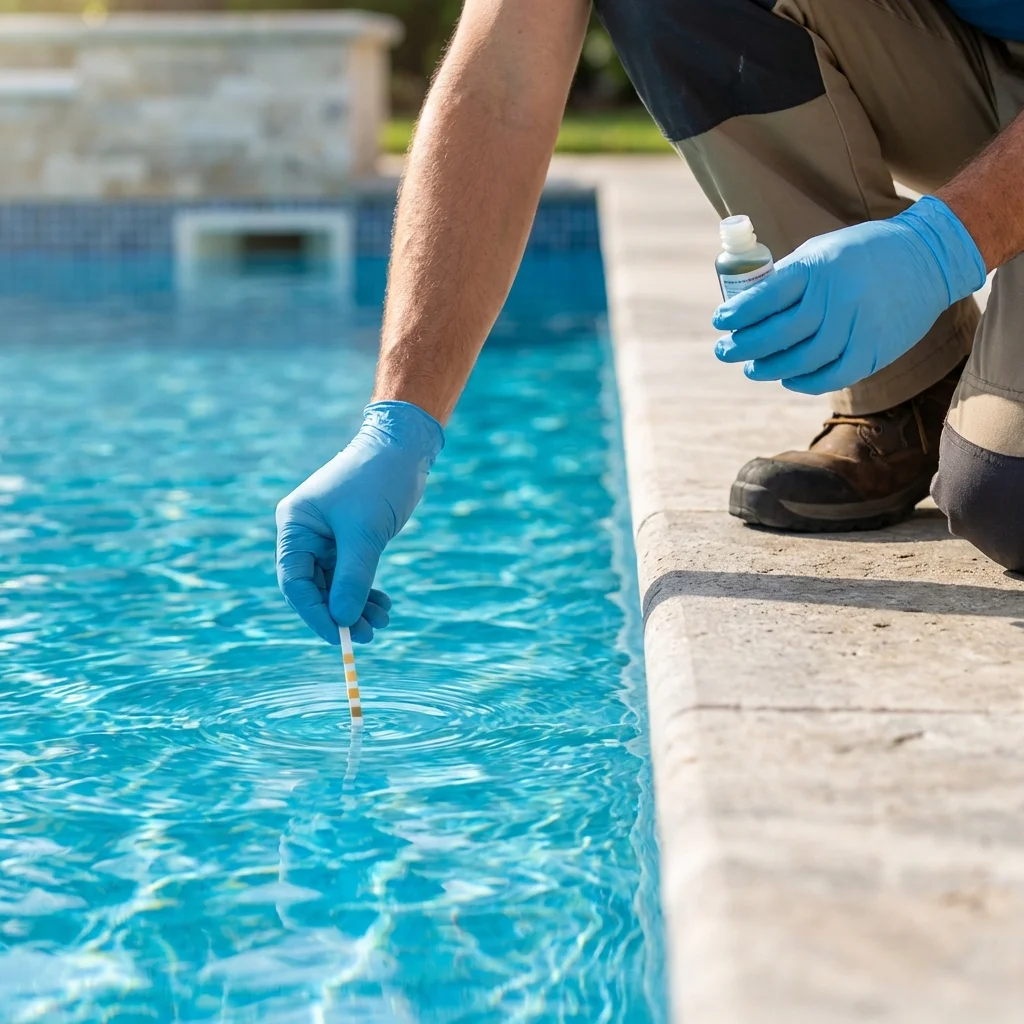
Water chemistry management. Keeping pH between 7.2 and 7.6, calcium hardness between 200 and 300 ppm, and total alkalinity between 80 and 120 ppm prevents the aggressive scaling that causes the worst waterline tile damage. High calcium and high pH cause mineral deposits. Low pH and low alkalinity cause chemical attack on grout and adhesive. Both extremes accelerate waterline deterioration.
Maintain consistent water level. Large water level fluctuations increase the wet-dry cycling zone, exposing more of the tile band to the harsh conditions. Keeping the water level consistent (topping up after evaporation, managing splash-out) concentrates the cycling to the narrowest possible band.
Seasonal deep clean. At the start and end of the swimming season, drain the pool to just below the waterline band and give the tiles a thorough clean with a pool-specific tile cleaner and a non-abrasive pad. This removes the accumulated season of deposits before they become permanent. For established stains, the how to remove pool stains guide covers treatment by stain type.
Inspect grout annually. Check the grout joints in the waterline band for cracking, crumbling, or gaps. Early grout failure can be addressed with spot regrouting before water penetrates behind the tiles and causes adhesive failure and tile detachment.
For guidance on when the broader pool surface needs attention, the how often should a pool be resurfaced guide covers timing by surface type, and the pool resurfacing cost guide covers pricing.