Drying vs Curing: Why the Difference Matters
Most homeowners use “dry” and “cured” interchangeably. They are not the same thing, and confusing them is the most common cause of premature refilling.
Drying is the evaporation of solvents from the paint surface. The paint feels dry to the touch, no longer tacky, and appears solid. This can happen within hours for some products. Drying is a surface event.
Curing is the chemical reaction within the paint film that transforms it from a soft, recently applied coating into a fully hardened, cross-linked, chemically resistant surface. Curing happens throughout the entire thickness of the paint film, not just the surface. It continues for days after the surface feels dry.
A pool paint that is dry but not cured is vulnerable. Water contact at this stage penetrates the partially cured film, traps remaining solvents underneath, disrupts the cross-linking reaction, and produces a paint film that is softer, weaker, and more permeable than one that was allowed to cure fully. The result is blistering, adhesion failure, and a dramatically shortened lifespan.
“The most expensive pool painting mistake is impatience. The paint looks ready. The surface feels hard. The homeowner wants to swim. But the chemistry underneath is not finished. Every pool we have had to strip and repaint because of premature failure, every single one, was refilled before the paint had properly cured.”
Cure Times by Paint Type
Each pool paint system has a different chemistry, which means a different cure timeline.
| Paint Type | Touch Dry | Recoat Window | Minimum Cure Before Refilling | Ideal Cure Before Refilling |
|---|
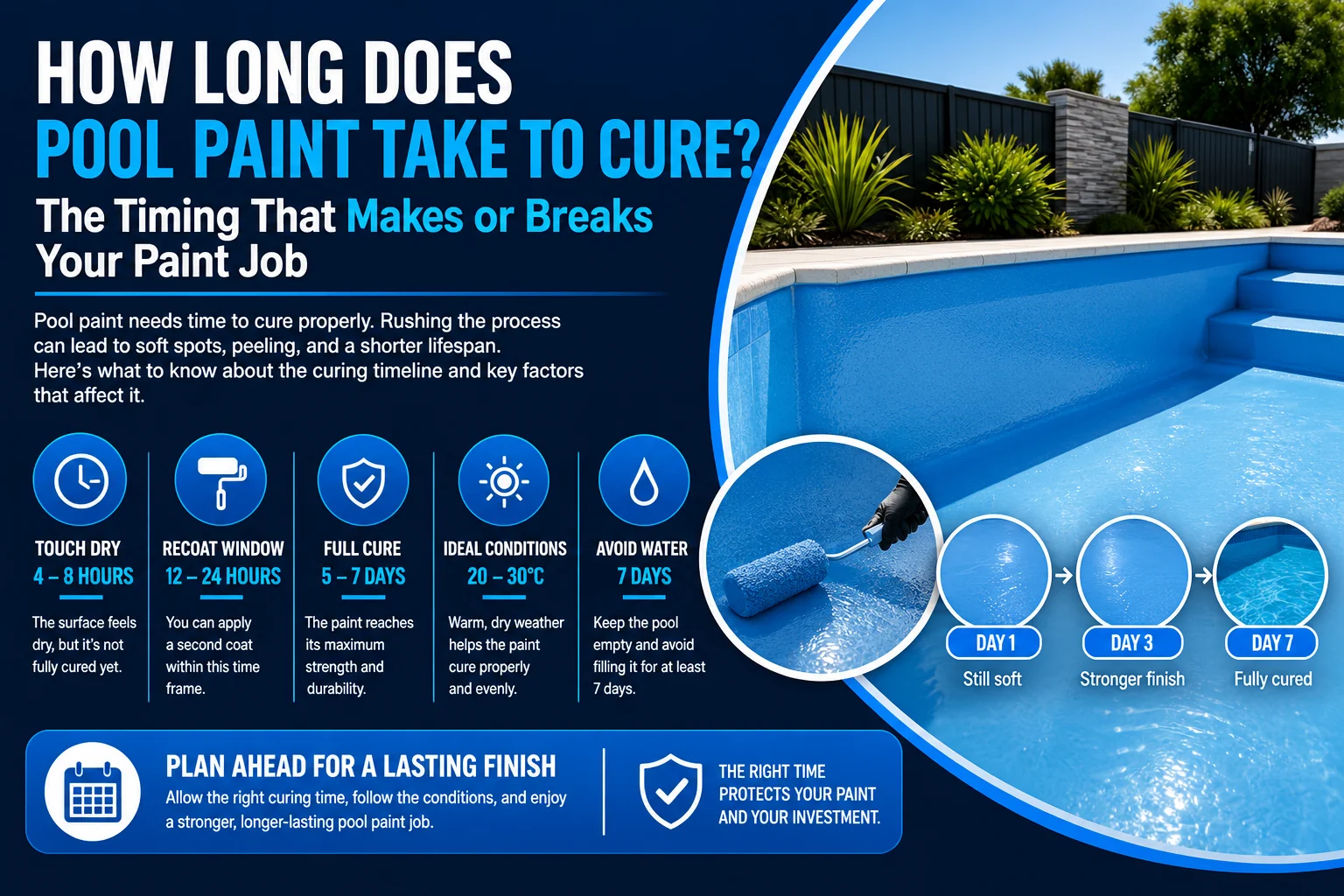
| Epoxy (Luxapool) | 4 to 8 hours | 12 to 48 hours (critical window) | 5 to 7 days (warm weather, 20C+) | 7 to 10 days for maximum film hardness |
| Epoxy (cool weather, below 15C) | 8 to 16 hours | 24 to 72 hours | 10 to 14 days | 14 days minimum |
| Chlorinated rubber | 2 to 4 hours | 16 to 24 hours | 5 to 7 days | 7 days |
| Acrylic (water-based) | 1 to 2 hours | 4 to 8 hours | 3 to 5 days | 5 to 7 days |
These timelines are based on manufacturer specifications for standard conditions (moderate temperature, low humidity, good ventilation). Real-world conditions frequently extend these times.
For the full comparison of paint types including durability, cost, and suitability by pool type, read the pool paint types guide. For longevity after curing, the how long pool paint lasts guide covers every factor.
What Affects Cure Time
Several factors can extend or shorten the cure period. Understanding them helps you plan the project timeline accurately.
Temperature is the most significant factor. Warmer temperatures accelerate the chemical curing reaction. Cooler temperatures slow it dramatically. Most pool paints specify a minimum application and curing temperature of 10 to 15 degrees Celsius. Below this, curing slows to the point where the paint may not achieve full hardness at all. Epoxy paints are particularly temperature-sensitive because their cross-linking reaction depends on heat energy to proceed.
Humidity affects cure time because high humidity slows solvent evaporation (for solvent-based paints) and can introduce moisture into the uncured film. In Sydney’s humid summer months, cure times may extend by one to two days compared to the same paint applied in dry autumn conditions.
Ventilation and airflow across the pool surface help solvents evaporate and fresh air reach the curing film. A pool in an enclosed courtyard with minimal airflow cures slower than an open, exposed pool. Keeping any pool covers or shade structures off during the cure period improves airflow.
Number of coats and film thickness. Each coat must cure before the next is applied (within the manufacturer’s recoat window), and the final cure time is measured from the last coat applied. Thicker films (from heavy application or additional coats) take longer to cure through their full depth.
Paint product quality. Premium products like Luxapool epoxy have well-documented cure specifications based on extensive testing. Budget or unbranded products may have less reliable cure data, making it harder to know when the film is genuinely ready for water contact.
The Epoxy Recoat Window: Why Timing Between Coats Is Critical
For epoxy pool paints specifically, the timing between coats is as important as the final cure time.
Epoxy paints have a “recoat window,” a specific period after the first coat during which the second coat must be applied. For Luxapool epoxy, this window is typically 12 to 48 hours after the first coat (temperature dependent).
Why the window matters: During this window, the first coat is partially cured but still chemically active on the surface. Applying the second coat during this period allows the two coats to chemically bond together (intercoat adhesion), creating a single unified film rather than two separate layers sitting on top of each other.
If you miss the window: If the second coat is applied after the recoat window has closed (the first coat has fully cured on the surface), the second coat bonds mechanically (by sitting on top) rather than chemically (by fusing into the first coat). This weaker bond means the second coat is more likely to peel or delaminate from the first coat over time, particularly under the chemical stress of pool water.
If you apply too early: If the second coat is applied before the first coat has reached the minimum recoat time, the solvents from the second coat can attack the still-soft first coat, causing wrinkling, bubbling, or softening.
This precise timing is one of the reasons professional pool painting delivers better results than DIY. Getting the recoat window right requires experience, temperature monitoring, and an understanding of how the specific product behaves in real conditions, not just what the label says.
What Happens If You Refill Too Early
Refilling the pool before the paint has fully cured is the most common cause of premature paint failure. Here is what happens at each stage.
Immediate effects (within days): The uncured paint film absorbs water. Trapped solvents that were still evaporating are sealed under the water surface. The film swells slightly as it absorbs moisture.
Short-term effects (weeks to months): Blisters form as trapped solvents and absorbed moisture create pressure pockets between the paint and the substrate. The paint surface becomes soft or chalky in areas where curing was incomplete. Chemical resistance is compromised: pool sanitiser attacks the undercured film faster than it would attack a fully cured one.
Medium-term effects (months to a year): Blistering spreads. Paint begins to peel in areas where adhesion was weakened by premature water contact. The surface becomes rough, stained, and deteriorated well ahead of the product’s expected lifespan. The pool needs to be drained, stripped, and repainted, doubling the project cost.
This is why the cure period is non-negotiable. A few extra days of an empty pool prevents the entire job from failing. For surface failures that have already occurred, the pool resurfacing cost guide covers what a redo costs, and the pool surface preparation guide covers the work required before repainting.
The Correct Refill and Startup Process
Once the paint has fully cured, the refill process itself requires careful management to protect the new surface.
Step one: Final surface inspection. Before any water touches the pool, the entire surface is inspected for any defects, missed spots, or areas that appear undercured (soft, tacky, or differently coloured compared to the surrounding surface). Any issues are addressed before refilling begins.
Step two: Controlled refilling. The pool is filled continuously from a single point (usually a garden hose placed in the deep end). Filling must not be interrupted: a partial fill that sits at one level for hours can create a visible tide mark on the new paint. Fill continuously until the pool is at operating level.
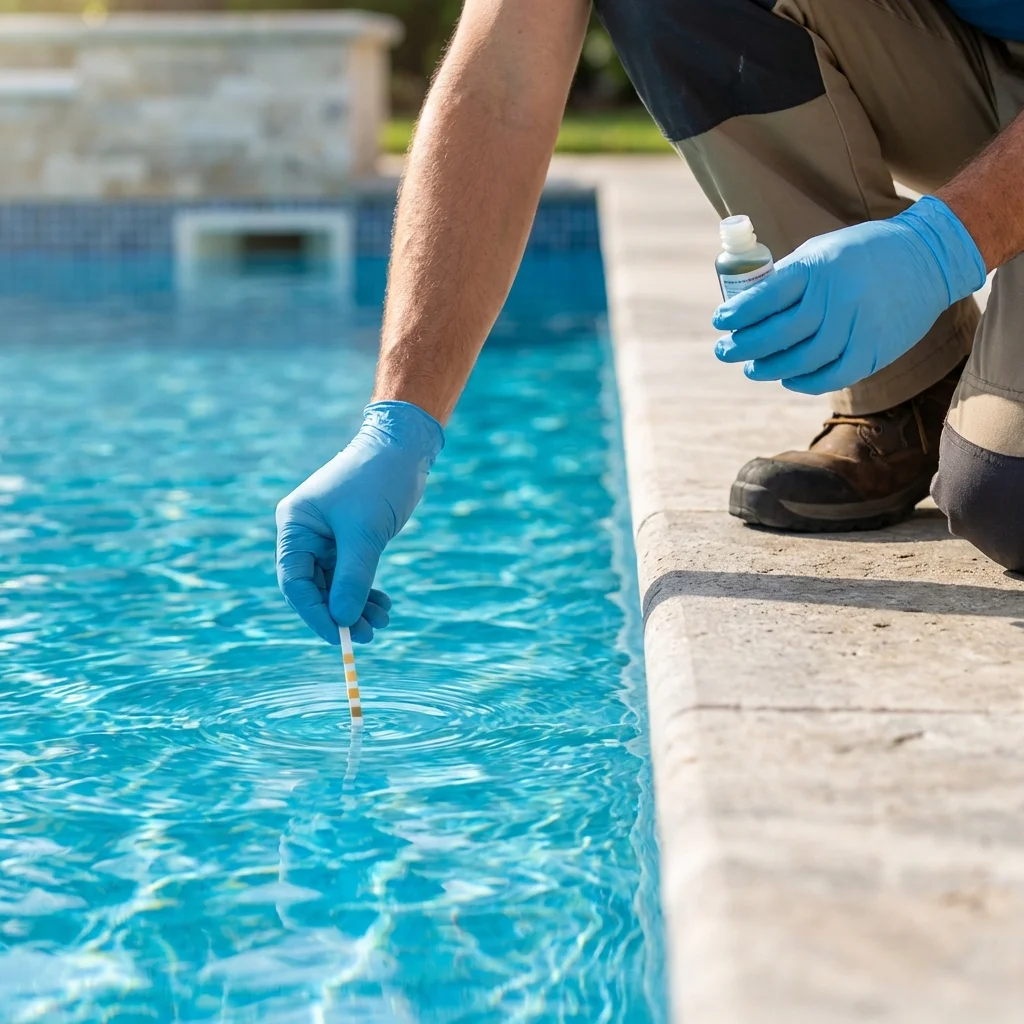
Step three: Initial water chemistry. Fresh fill water must be balanced before the pump and filter are started. The critical parameters for new paint are pH (7.2 to 7.6), total alkalinity (80 to 120 ppm), and calcium hardness (200 to 300 ppm). Aggressive water (low pH, low alkalinity) will attack a new paint surface faster than an established one because the surface is at its most chemically reactive in the first few weeks.
Step four: Controlled sanitiser introduction. Sanitiser (chlorine or salt chlorinator) should be introduced gradually, starting at the lower end of the recommended range and building up over the first week. Shocking a freshly painted pool with a high chlorine dose can damage the new surface.
Step five: First four weeks of care. The first four weeks after refilling are the most important for long-term paint performance. Maintain strict water chemistry, avoid using automatic pool cleaners for the first two weeks (the suction and wheels can mark a surface that is still hardening), brush the walls gently with a soft nylon brush (never stainless steel) to remove any initial chalking, and avoid dropping heavy objects or dragging equipment across the new surface.
For the complete aftercare program, read the pool resurfacing maintenance guide.
Best Time of Year to Paint a Pool in Sydney
Because cure time is temperature-dependent, the time of year you paint directly affects how long you wait before swimming.
| Season | Average Temperature Range | Cure Time Impact | Recommendation |
|---|
| Summer (December to February) | 25 to 35C | Fastest cure. Minimum cure times achievable. Risk of surface drying too fast in extreme heat. | Good for cure speed, but schedule for milder summer days and avoid painting in direct midday sun above 35C |
| Autumn (March to May) | 15 to 25C | Ideal cure conditions. Moderate temperatures allow even, thorough curing without rushing. | Best overall season for pool painting in Sydney |
| Winter (June to August) | 8 to 18C | Slowest cure. May need to double the cure period. Risk of overnight temperatures dropping below the minimum. | Acceptable if temperatures stay above 10C. Allow extended cure times. |
| Spring (September to November) | 15 to 25C | Ideal cure conditions similar to autumn. | Excellent timing: paint in early spring, swimming by late spring. |
Autumn and spring deliver the best balance of workable temperatures and reasonable cure times. Painting in autumn means the pool is ready for the start of summer. Painting in early spring means you are swimming by late spring.
For a broader pool renovation that includes painting alongside other work, the swimming pool renovation ideas guide covers how to combine services, and the pool renovation cost guide covers bundled project pricing.