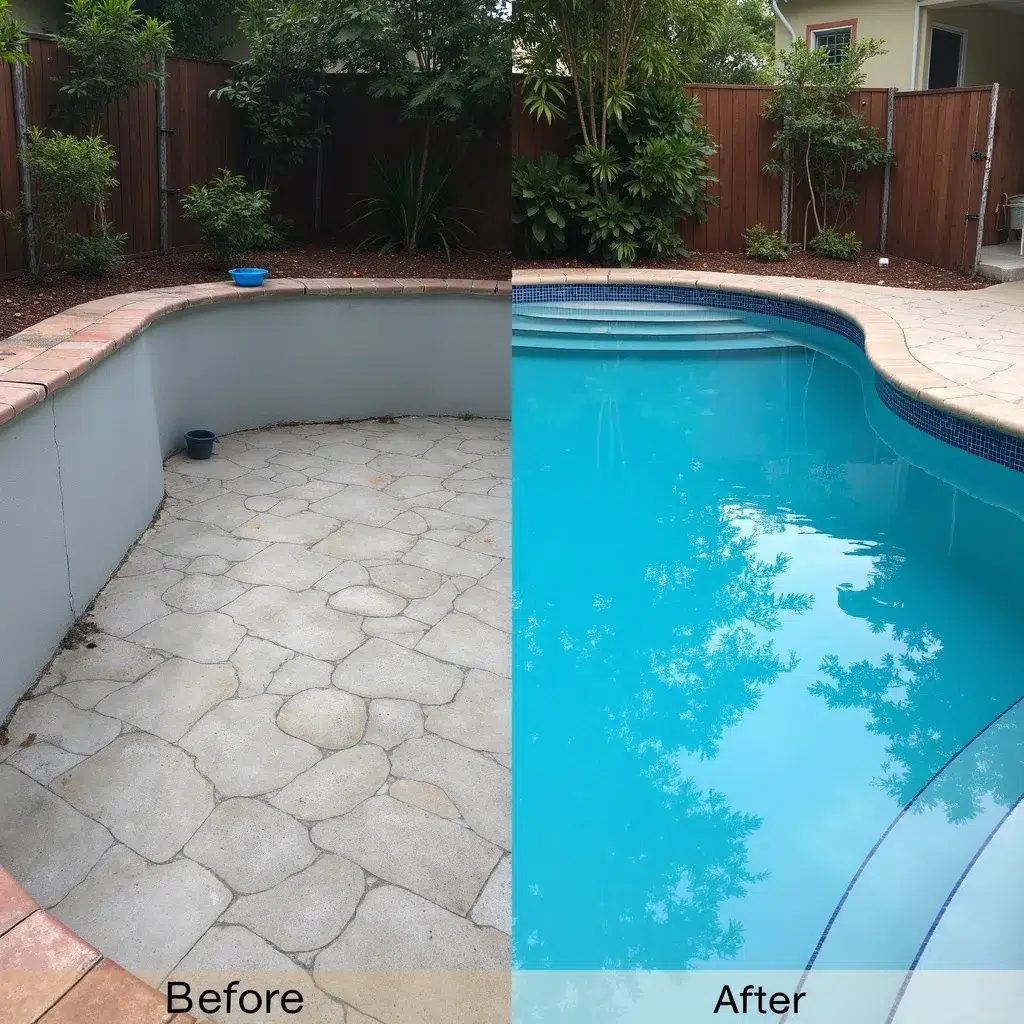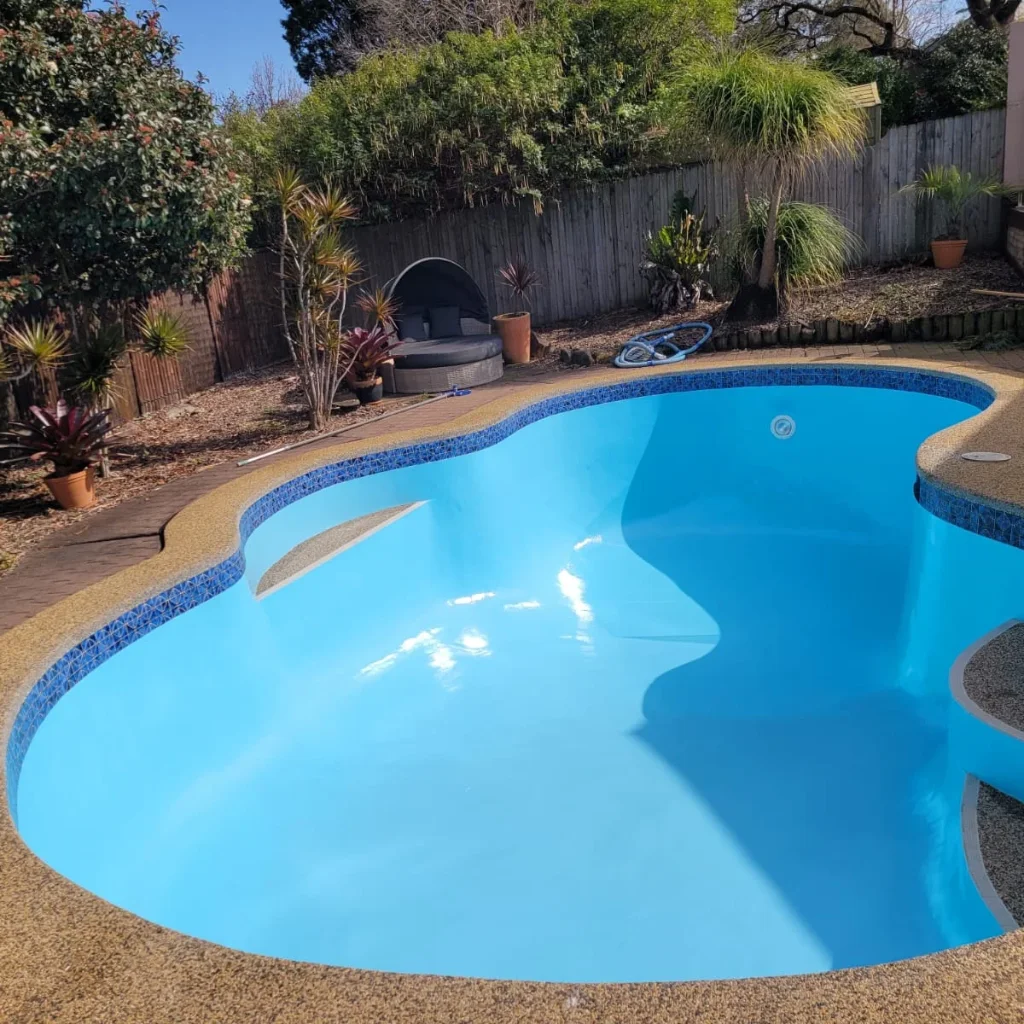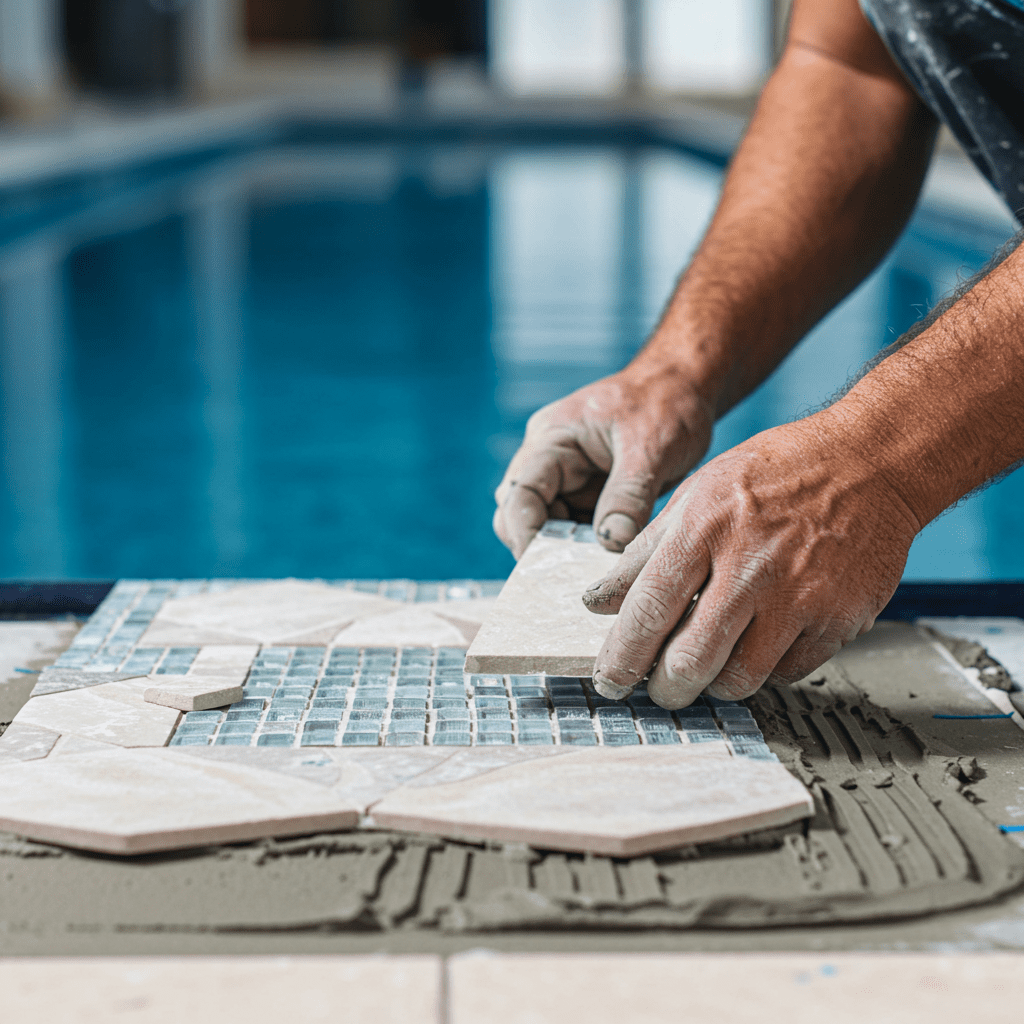
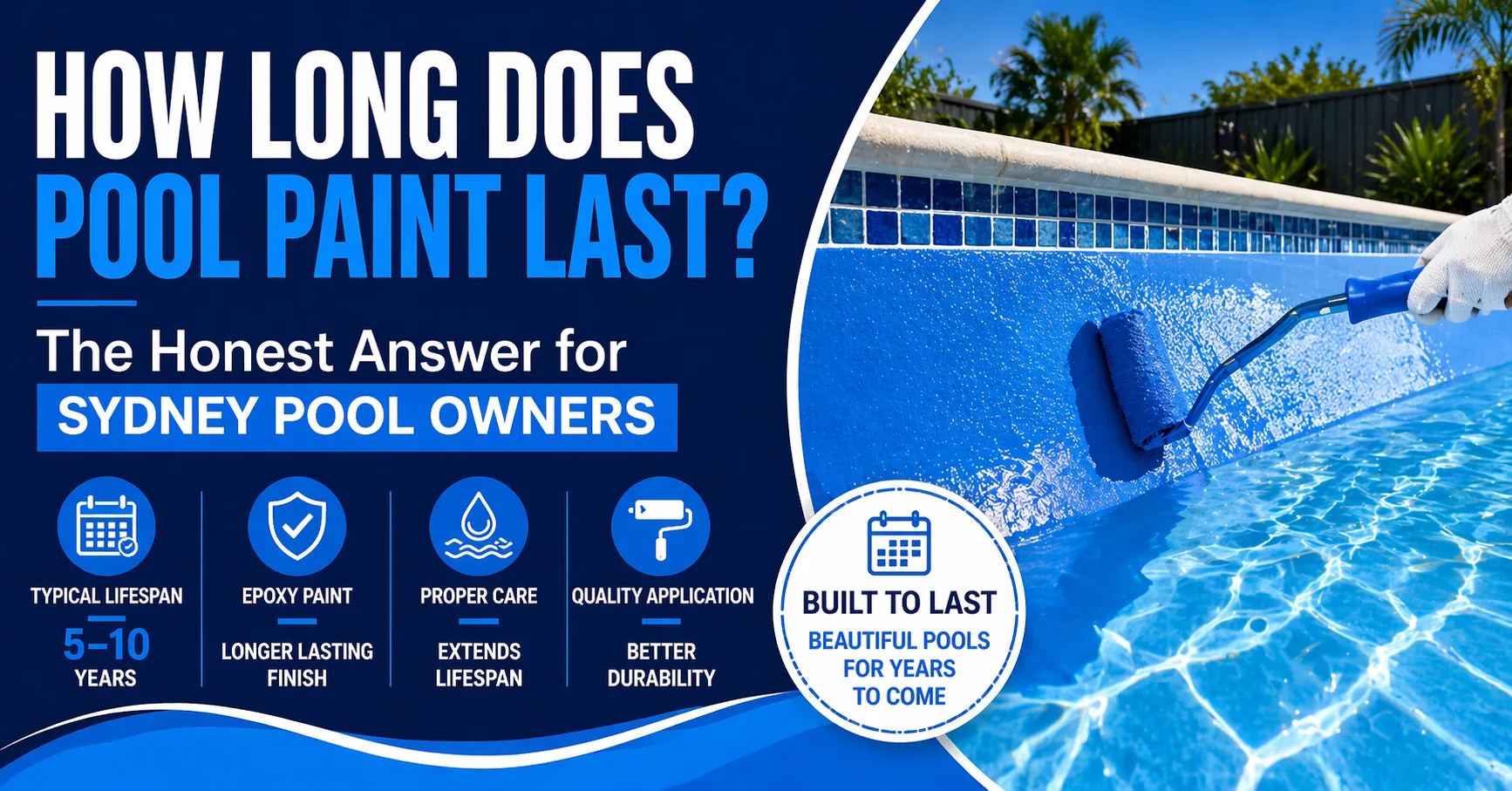
How long does pool paint last? It’s one of the first questions Sydney pool owners ask, usually after noticing their pool starting to look chalky, patchy, or just flat-out tired. The short answer is 2 to 8 years. But the real answer depends on several factors that most contractors don’t explain upfront.
Sydney’s UV is relentless. The summers are long, the pool season stretches well past what the calendar suggests, and the combination of sun, salt, and pool chemicals creates a tough environment for any painted surface. Understanding what works, what doesn’t, and why pool paint fails early can save you thousands in avoidable repaints.
This guide covers everything: paint types, lifespan benchmarks, the factors that cut that lifespan short, signs your pool paint is on its way out, and what to do when repainting is no longer the right solution. Whether you own a backyard pool in Parramatta, a commercial facility in Chatswood, or a rental property in Cronulla, the fundamentals are the same.
What Is Pool Paint and Why Does It Matter?
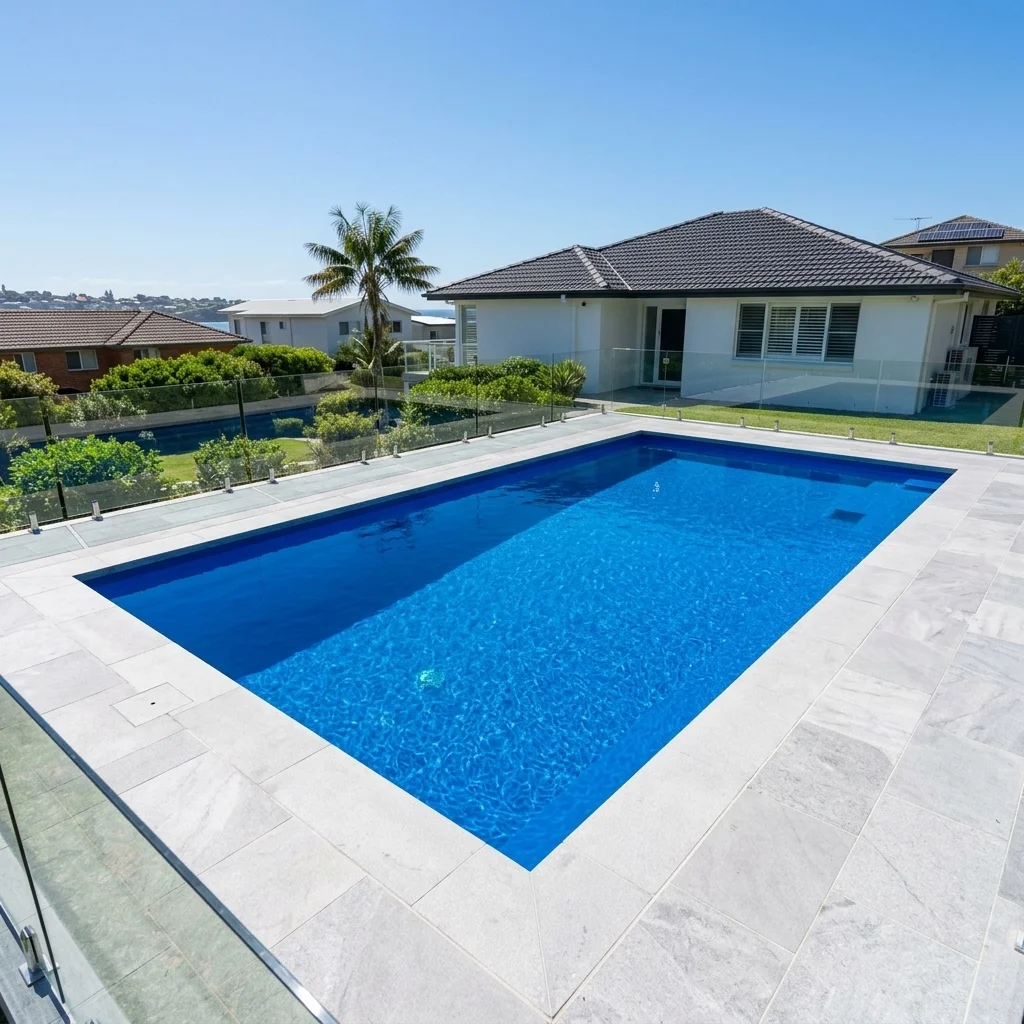
Pool paint is a specialised waterproof coating applied directly to the shell of a concrete, fibreglass, or render pool. Its job is to seal the surface, prevent water absorption into the structure, resist algae growth, and keep the pool looking visually appealing.
Unlike exterior house paint, pool paint is formulated to withstand constant submersion in chemically treated water, UV exposure from above, and physical contact from swimmers. That said, it is not a permanent surface. Every pool paint job has a lifespan, and understanding that lifespan is key to planning maintenance and budgets properly.
The good news is that a professionally applied paint job with proper preparation can hold up very well, even in Sydney’s demanding conditions. The bad news is that a rushed job on poorly prepared surfaces won’t last no matter how good the paint is.
The Three Types of Pool Paint and How Long Each Lasts
Pool paint lifespan varies significantly across the three main product types available in Australia. Here’s a clear breakdown:
| Paint Type | Typical Lifespan | Best Surface | UV Resistance | Key Limitation |
|---|---|---|---|---|
| Rubber-based (chlorinated) | 2 – 4 years | Previously rubber-painted pools | Low | Cannot layer other paint types over it |
| Water-based acrylic | 2 – 5 years | Concrete, render | Moderate | Fades faster in high UV, shorter intervals |
| Epoxy-based | 5 – 8+ years | Concrete, fibreglass | High | Requires thorough surface preparation |
Rubber-based (chlorinated rubber) paints are the oldest technology still in use. They’re common in pools built before the 1990s and remain relevant only because you cannot apply a different paint type directly over a rubber-painted surface without complete removal first. If your pool has rubber-based paint, your options are essentially: repaint with rubber again, or strip it back and start fresh.
Water-based acrylic paints offer faster drying times and easier application. They’re a popular choice when a pool needs a quick turnaround or when budget is a primary concern. The trade-off is longevity. In Sydney’s UV conditions, acrylic finishes on lighter-coloured pools tend to fade noticeably within two to three seasons.
Epoxy-based paints are the professional standard for long-term performance. Properly prepared and applied epoxy creates a hard, chemically resistant surface that holds up against chlorine, salt, UV, and algae far better than the alternatives. The catch is that epoxy demands thorough surface preparation. Shortcuts at the prep stage will cause epoxy to fail just as quickly as cheaper products.
For most Sydney pools, epoxy is the recommended choice. The higher upfront cost is almost always recovered through fewer repaints over a decade.
What Affects How Long Pool Paint Lasts?
Paint type is only part of the equation. Several other factors have a significant impact on how long your pool’s finish holds up between jobs.
Surface Preparation
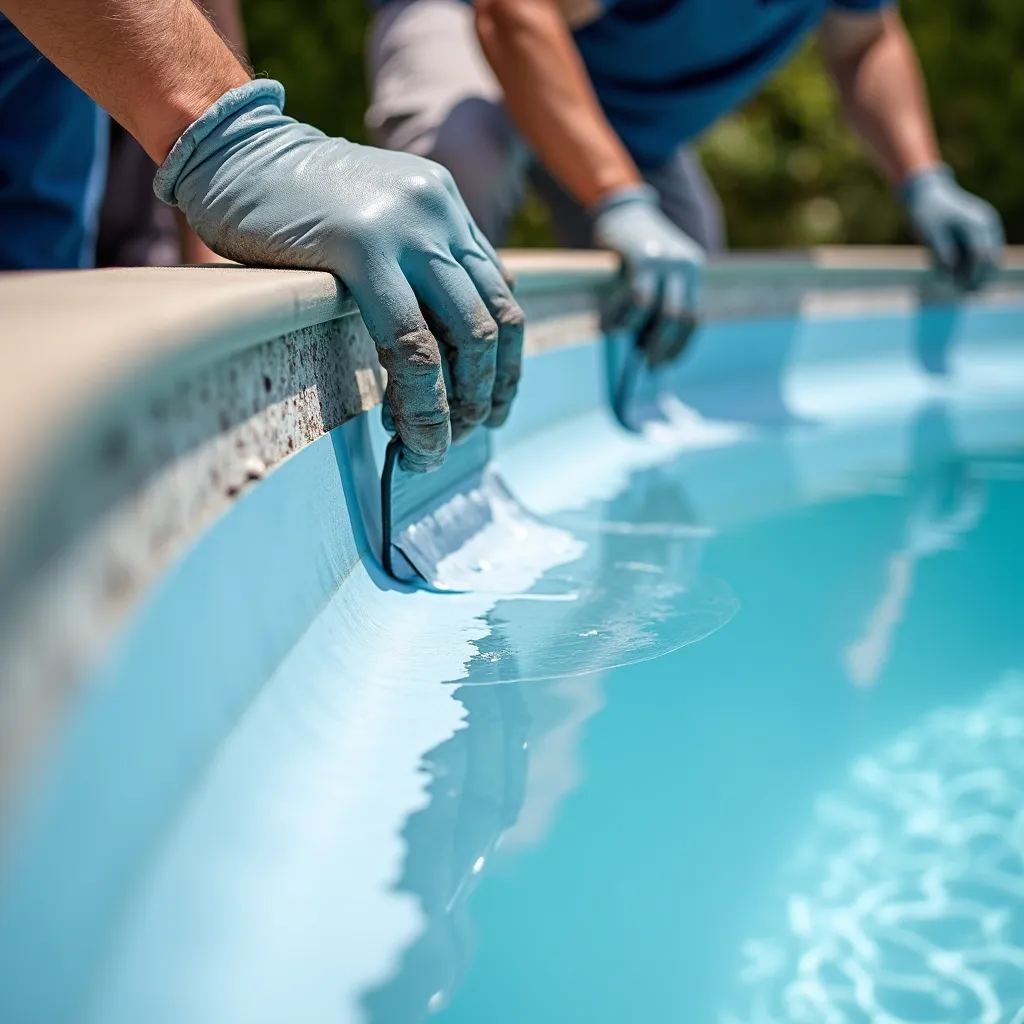
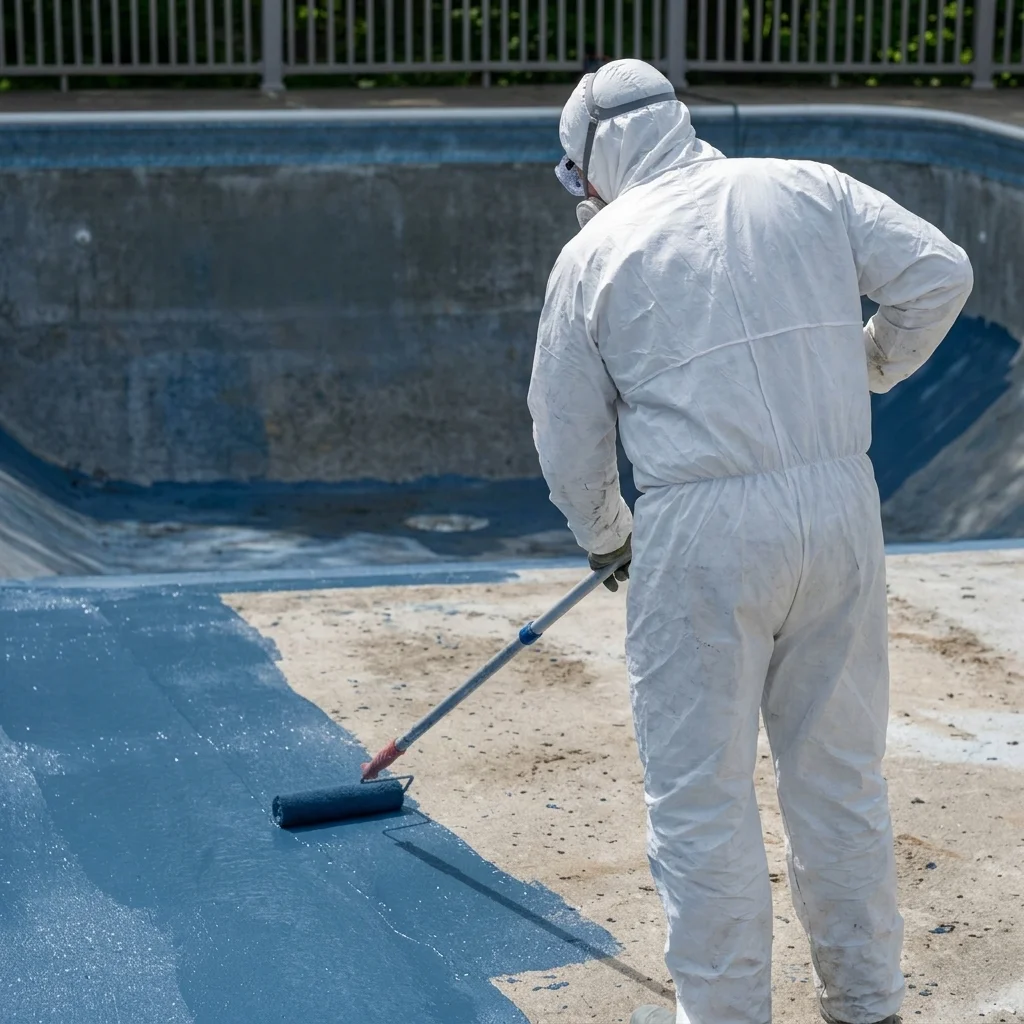
This is the single most important factor, and the one most often underestimated by pool owners who go with cheaper quotes. Proper preparation involves draining the pool, removing all old coating that isn’t adhering correctly, cleaning the surface thoroughly, addressing any cracks or porous areas, and applying the correct primer before the first coat of paint.
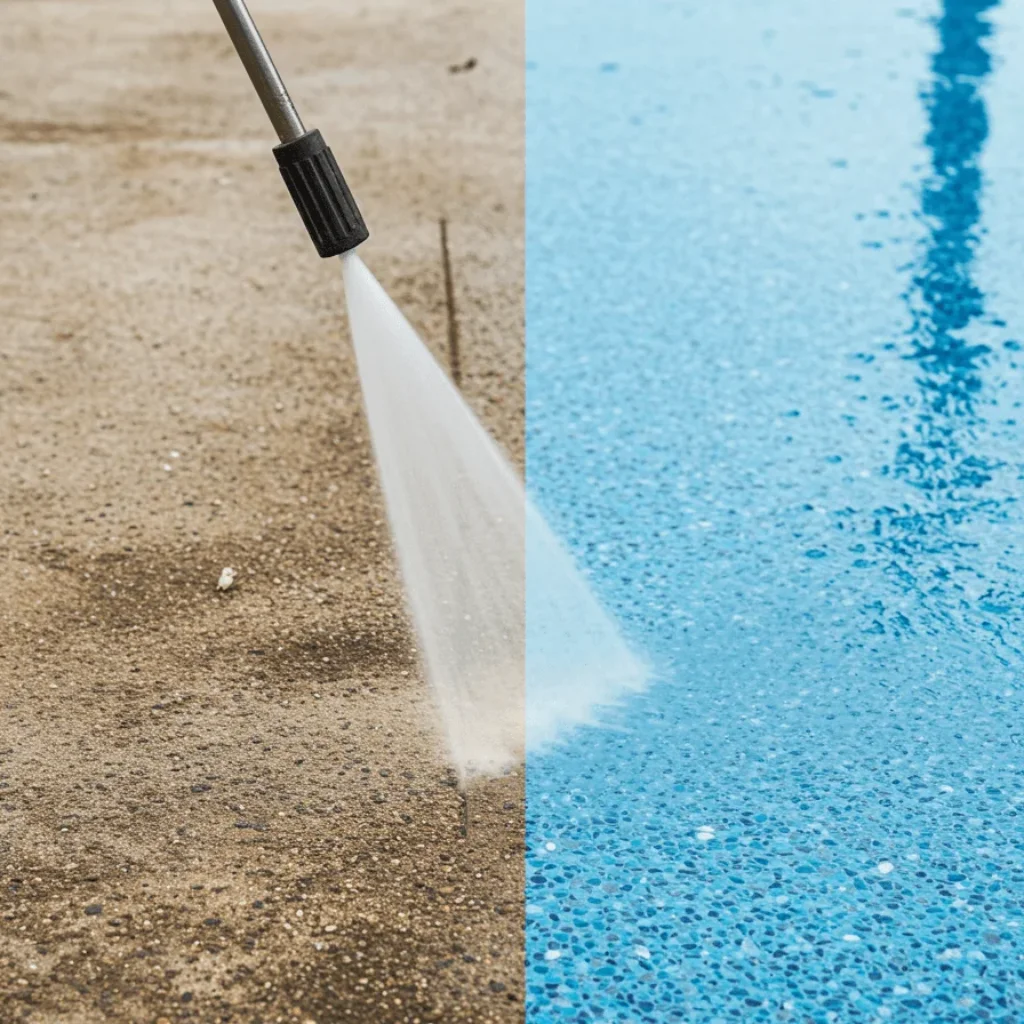
A professional pool blasting service uses abrasive blasting to remove old paint and contaminants down to a clean, receptive surface. Without this step, even premium epoxy paint won’t bond properly and will begin peeling or blistering long before it should.
Water Chemistry
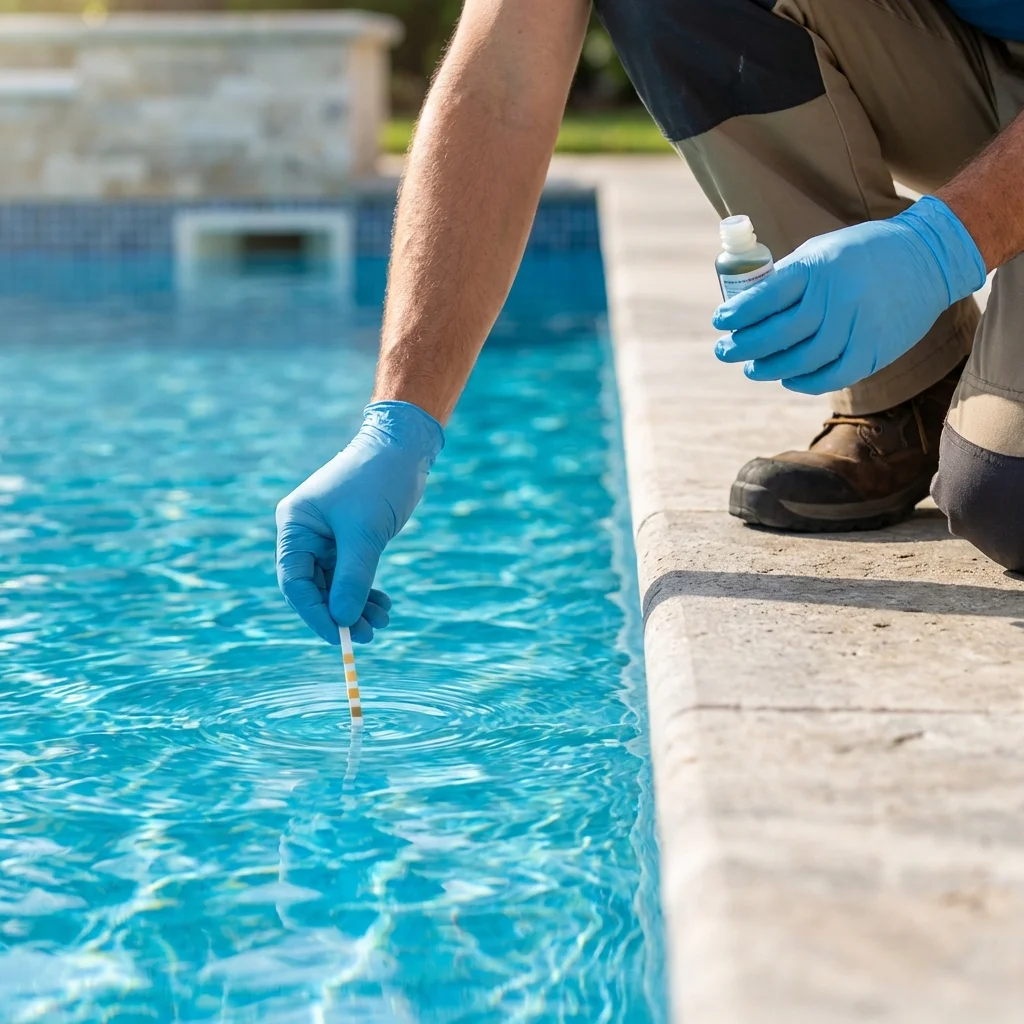
Pool chemistry has a direct relationship with how long paint lasts. A pool running outside the recommended pH range of 7.2 to 7.6 creates an environment that actively breaks down the coating. High chlorine levels are particularly damaging to rubber and acrylic paints. Saltwater pools require specific compatible paint products to avoid accelerated degradation.
Testing and balancing your water weekly is one of the most cost-effective things you can do to protect a paint job. It’s far cheaper than an early repaint.
Sydney’s UV and Climate
Sydney consistently records high UV index readings, particularly from October through March. Pool surfaces facing north or west receive the most direct exposure. Lighter colours reflect more UV and tend to fade faster visually, even if the coating itself remains intact. Darker finishes absorb more heat, which can cause some paint types to soften and wear faster over summer.
Algae and Biological Growth
Algae doesn’t just make a pool look green. Left untreated, it penetrates the paint surface and lifts it from below. Pools that go through periods of neglect, particularly over winter when usage drops, are most vulnerable. Regular brushing and prompt green pool treatment when algae appears protects both the water quality and the painted surface beneath it.
Incompatible Paint Layering
Applying a new paint type over an incompatible existing coat is one of the fastest ways to ruin a paint job. Epoxy applied over rubber-based paint, for example, will delaminate within months. Before any repaint, it’s essential to identify what’s already on the surface and either work within those constraints or remove the existing coating entirely.
Pool Usage and Bather Load
Commercial pools used by gyms, hotels, schools, and aquatic centres experience significantly higher bather loads than residential pools. Higher usage means more chemical introduction, more physical abrasion, and more frequent backwashing cycles, all of which accelerate paint wear. Commercial pool operators in Sydney typically need to factor in more frequent pool inspections and shorter intervals between repaints.
Signs Your Pool Paint Is Coming to the End of Its Life
You don’t need to wait for the paint to be completely gone before taking action. Catching these warning signs early can save you from a more expensive restoration job later.
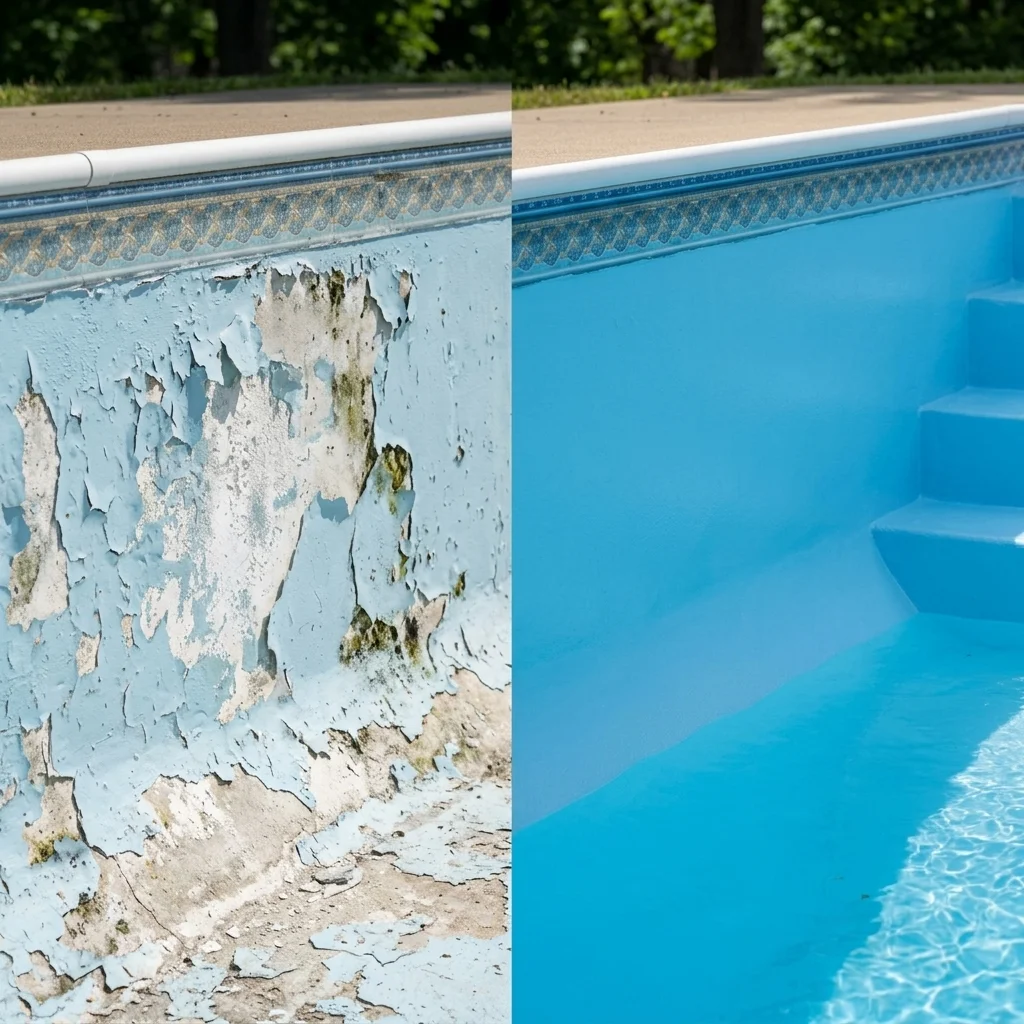
- Chalky or powdery residue: Run your hand along the pool wall. If white or chalky powder comes off on your palm, the paint binder is breaking down.
- Peeling or blistering: Localised peeling indicates the paint has lost adhesion, usually due to moisture behind the coating or an incompatible paint layer beneath.
- Uneven colour fading: Patchy fading, where some areas have held colour and others haven’t, suggests inconsistent application or preparation during the last repaint.
- Rough or sandpaper-like texture: Paint that was smooth when applied but now feels coarse has broken down at the surface level and will no longer protect the substrate properly.
- Persistent staining that won’t clean off: Staining that survives brushing and chemical treatment often indicates the paint surface has become porous and is absorbing rather than repelling contaminants.
- Recurring algae despite correct chemical levels: If algae keeps returning even when your water chemistry is correct, the paint surface has likely become too porous to resist biological growth.
- Visible cracks in the painted surface: Surface cracks allow water to penetrate behind the paint, accelerating delamination and potentially allowing water into the pool structure itself.
Seeing two or more of these at once is a clear signal that a repaint is overdue. A professional pool inspection in Sydney will confirm the extent of the damage and the best path forward.
“The preparation stage accounts for about 80 percent of how long a pool paint job will last. We’ve repainted pools that were done six months earlier by others, simply because the surface wasn’t properly prepared before the first coat went on. There are no shortcuts that don’t show up eventually.”
Ray, Lead Technician, Advance Pool Painting
How to Make Pool Paint Last Longer
Extending pool paint lifespan isn’t complicated. It comes down to consistent maintenance and making the right decisions at repaint time.
Weekly Water Testing and Balancing
This is non-negotiable. Test pH, chlorine, alkalinity, and calcium hardness every week and adjust as needed. Keeping the chemistry in range is the single cheapest and most effective thing you can do to protect a paint job. Most pool paint damage from chemistry happens gradually and invisibly before it becomes obvious.
Regular Brushing
Brush the walls, floor, and steps at least once a week. This dislodges early algae before it can establish itself and removes fine particles that settle on the surface and can cause staining over time.
Maintain a Consistent Water Level
Never let the water level drop far below the waterline tiles. Painted surfaces exposed to direct sunlight above the waterline deteriorate significantly faster than submerged sections. In Sydney’s summer, this can make a visible difference within a single season.
Fix Damage Promptly
A small chip, crack, or area of lifting paint addressed immediately stays a small problem. The same damage left alone allows water to get beneath the paint layer and lifts it outward from that point, turning a minor repair into a much larger one. Check for a pool crack repair service in Sydney if you notice structural cracking.
Use the Right Products
Avoid cheap generic pool chemicals that don’t specify their pH or chemical composition clearly. Products outside the recommended formulations can introduce compounds that react badly with certain paint types, particularly rubber-based and some acrylic finishes.
Choose Professional Application for Repaints
The difference between a paint job that lasts three years and one that lasts seven is almost entirely in the preparation and application. Professional pool painting in Sydney includes proper surface assessment, correct blasting and priming, and application under appropriate temperature and humidity conditions. These variables matter significantly to the finished result.