Construction and Installation
The way each pool is built is the first major difference and it affects everything that follows.
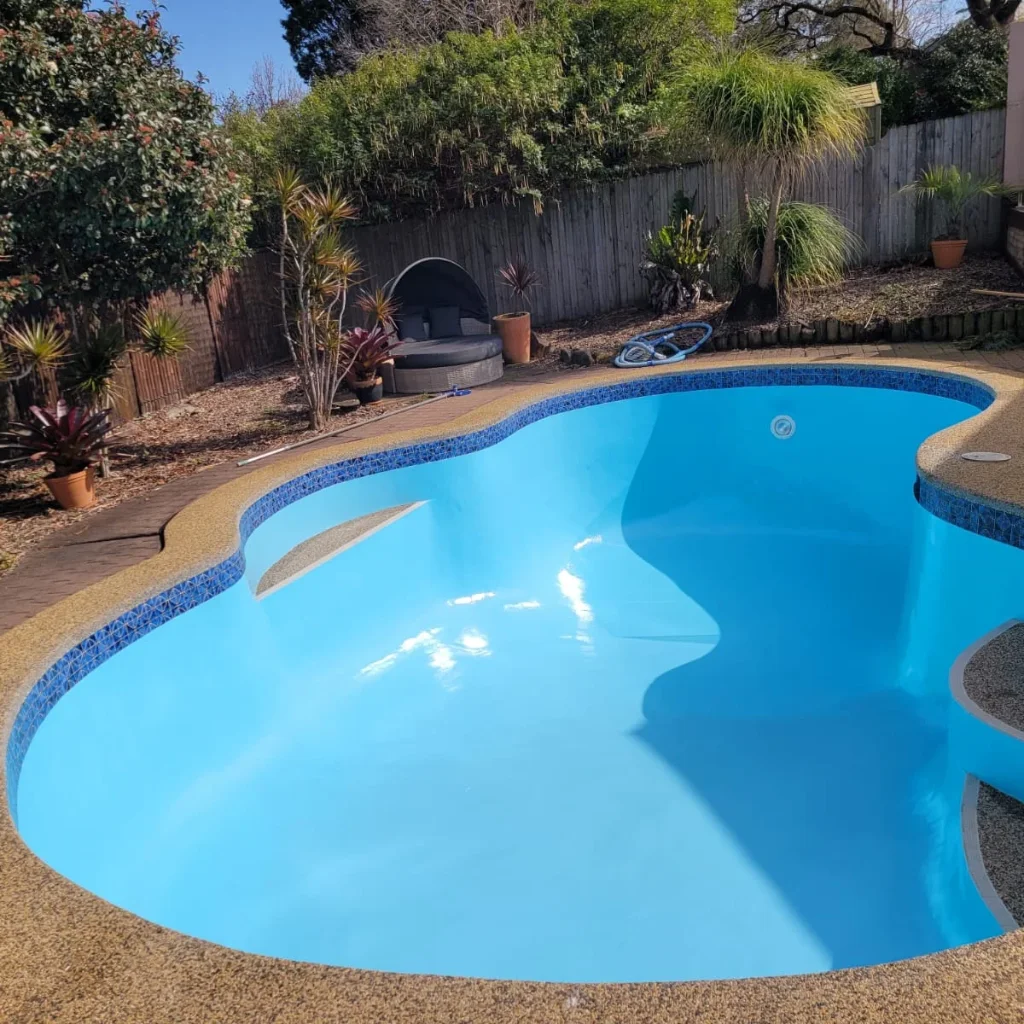
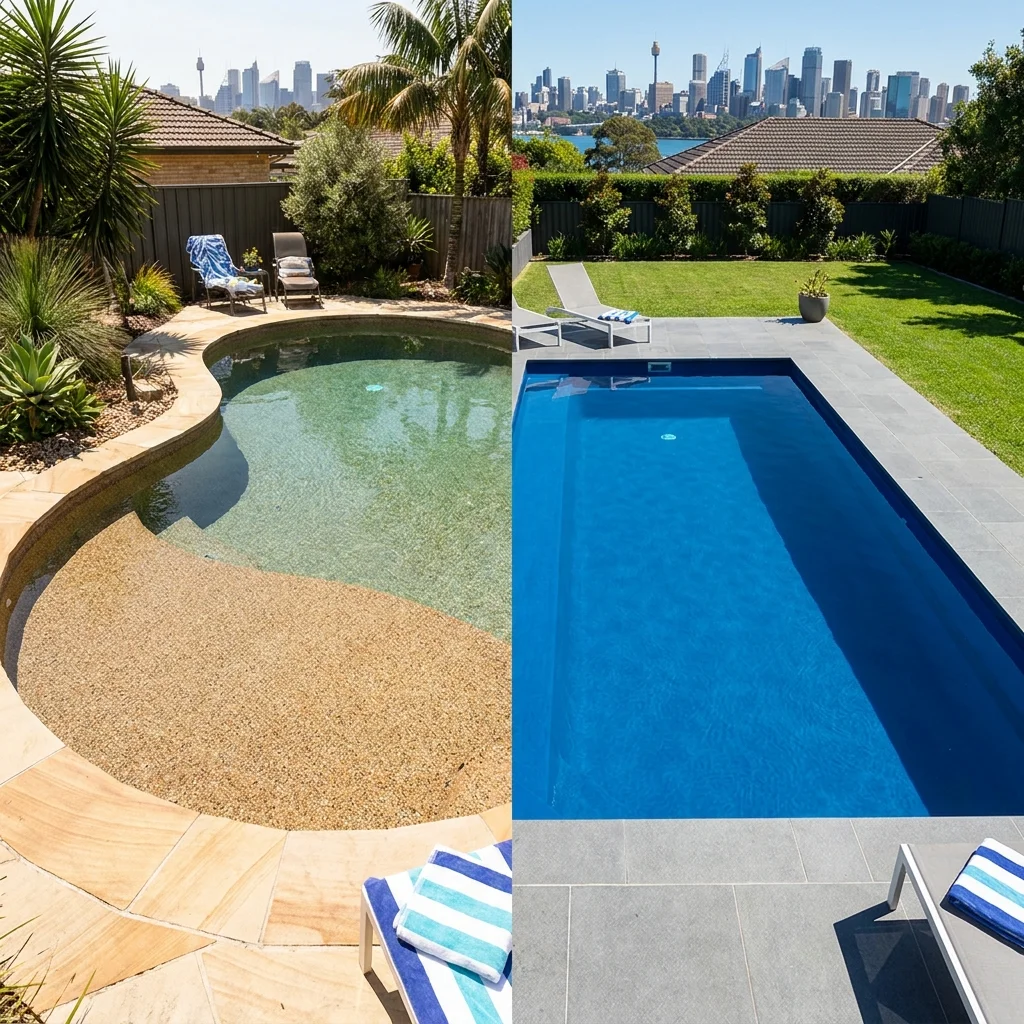
Concrete pools are built on-site from scratch. A steel-reinforced cage is constructed in the excavated hole, then concrete (shotcrete or gunite) is sprayed over the frame. Once cured, the interior is finished with render, pebblecrete, tiles, or paint. The entire process takes eight to twelve weeks from excavation to first swim.
Fibreglass pools are manufactured in a factory as a single-piece shell. The finished shell is delivered to your property on a truck, lowered into the excavated hole by crane, levelled, backfilled, and connected to plumbing. Installation typically takes one to three weeks.
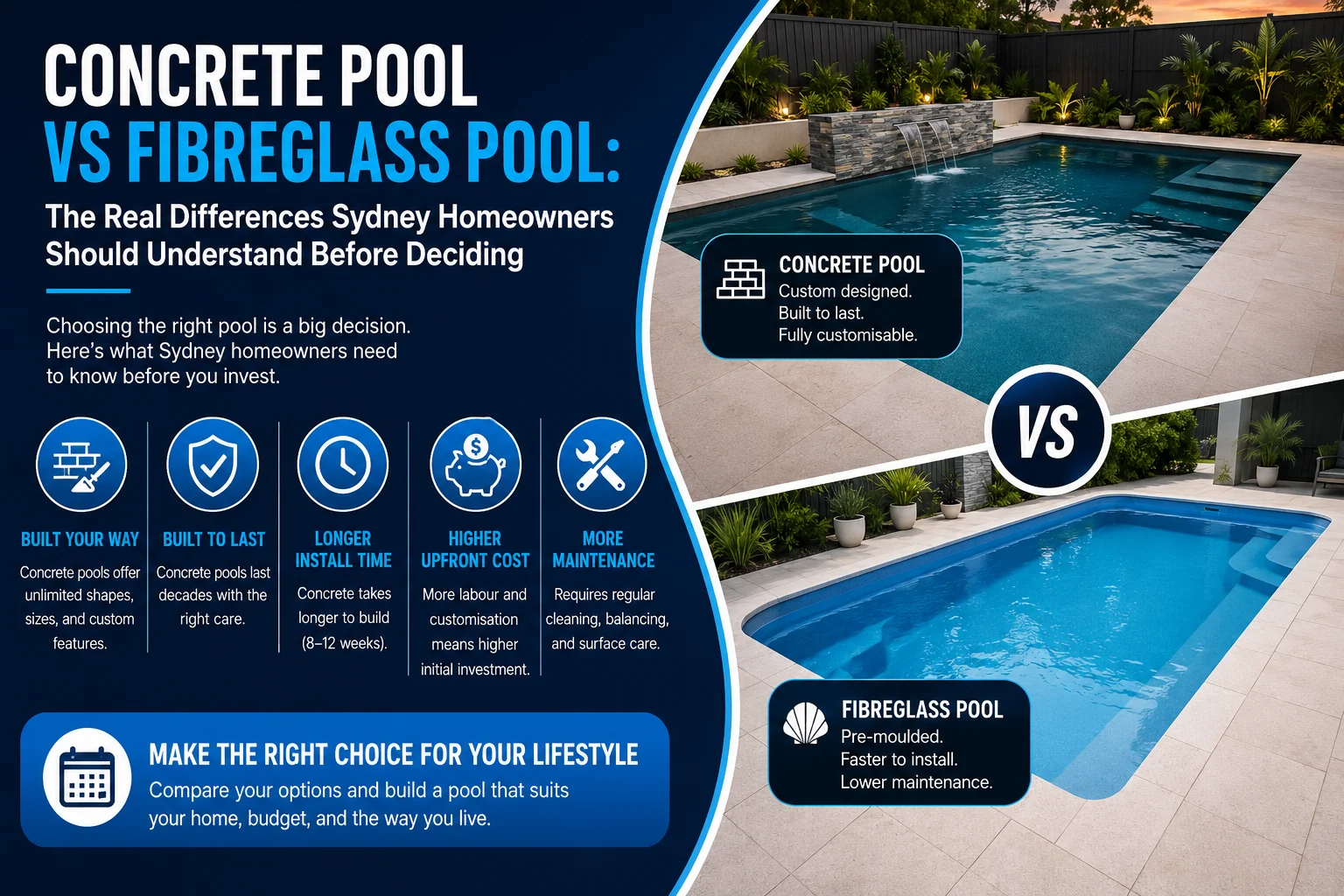
“Concrete gives you complete freedom on shape and size. Fibreglass gives you speed and simplicity. The right choice depends on what matters more to you: customisation or convenience.”
Full Comparison: Concrete vs Fibreglass
| Factor | Concrete Pool | Fibreglass Pool |
|---|---|---|
| Design flexibility | Unlimited shapes, sizes, depths, and features | Limited to factory-moulded shapes and sizes |
| Maximum size | No practical limit | Typically up to 12m (transport width restrictions) |
| Installation time | 8 to 12 weeks | 1 to 3 weeks |
| Upfront cost | Higher (custom built on-site) | Lower to mid-range (factory-made shell) |
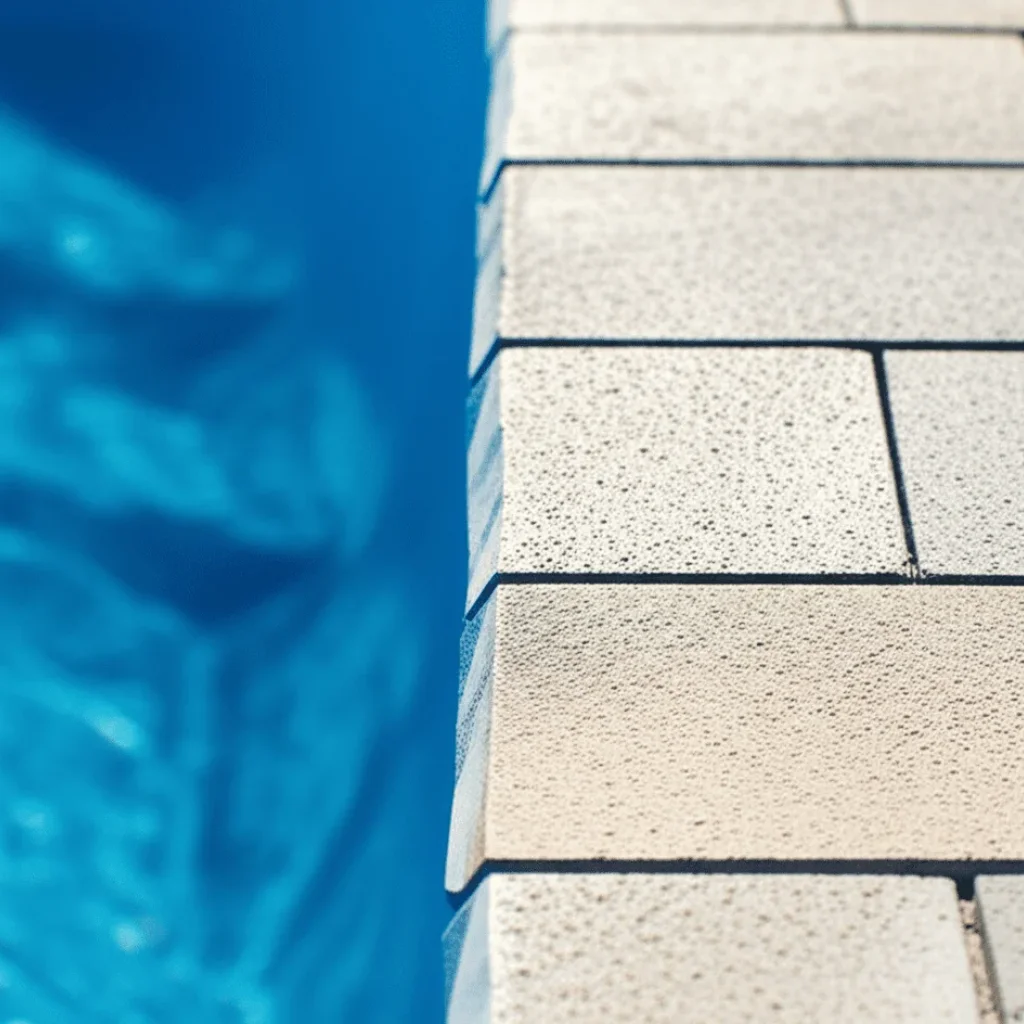
| Interior surface | Pebblecrete, render, tiles, or paint | Smooth gelcoat finish |
| Surface texture | Varies by finish (smooth to textured) | Smooth and non-porous |
| Algae resistance | Lower (porous surfaces harbour algae) | Higher (smooth surface resists algae growth) |
| Chemical usage | Higher (porous surface absorbs chemicals) | Lower (non-porous surface retains chemical balance) |
| Structural lifespan | 50+ years | 25 to 30 years (shell) |
| Resurfacing frequency | Every 10 to 15 years (pebblecrete) or 5 to 8 years (paint) | Every 15 to 20 years (gelcoat) |
| Renovation options | Extensive: resurface, retile, reshape, add features | Limited: resurface gelcoat, replace fittings |
| Resale value | Generally higher (perceived as premium) | Good, increasingly popular |
Cost Comparison
Cost is usually the deciding factor for most Sydney homeowners.
New pool installation:
Concrete pools typically cost more upfront because they are custom-built on-site with skilled labour over several weeks. Fibreglass pools cost less to install because the shell is pre-manufactured and installation is faster.
Ongoing maintenance costs:
Fibreglass pools are cheaper to maintain year-on-year. The smooth, non-porous surface means less chemical consumption, less scrubbing, and fewer algae problems. Concrete pools with porous finishes like pebblecrete require more chemical balancing, more frequent brushing, and are more prone to algae in shaded areas.
Renovation costs:
When it is time to renovate, concrete pools offer more options but the costs vary based on the scope. A full pebblecrete resurfacing or concrete resurfacing is a bigger project than a fibreglass gelcoat resurfacing. However, concrete pools can also be refreshed more affordably with a pool painting using Luxapool epoxy, which is not an option for fibreglass.
For detailed pricing on resurfacing either type, the pool resurfacing cost guide covers every variable.
Maintenance Differences
Day-to-day maintenance is where fibreglass and concrete pools differ most noticeably.
Concrete pool maintenance:
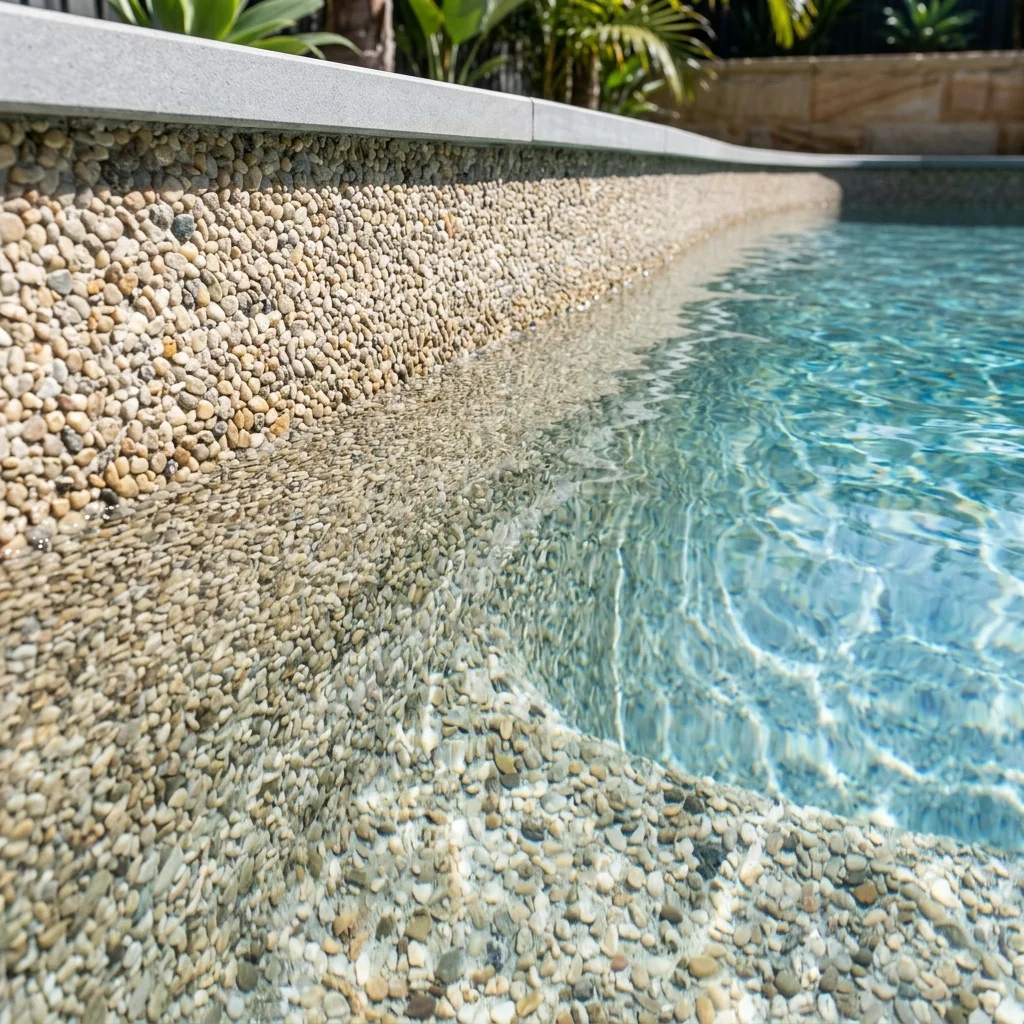
- Brush walls and floor weekly to prevent algae embedding in the porous surface
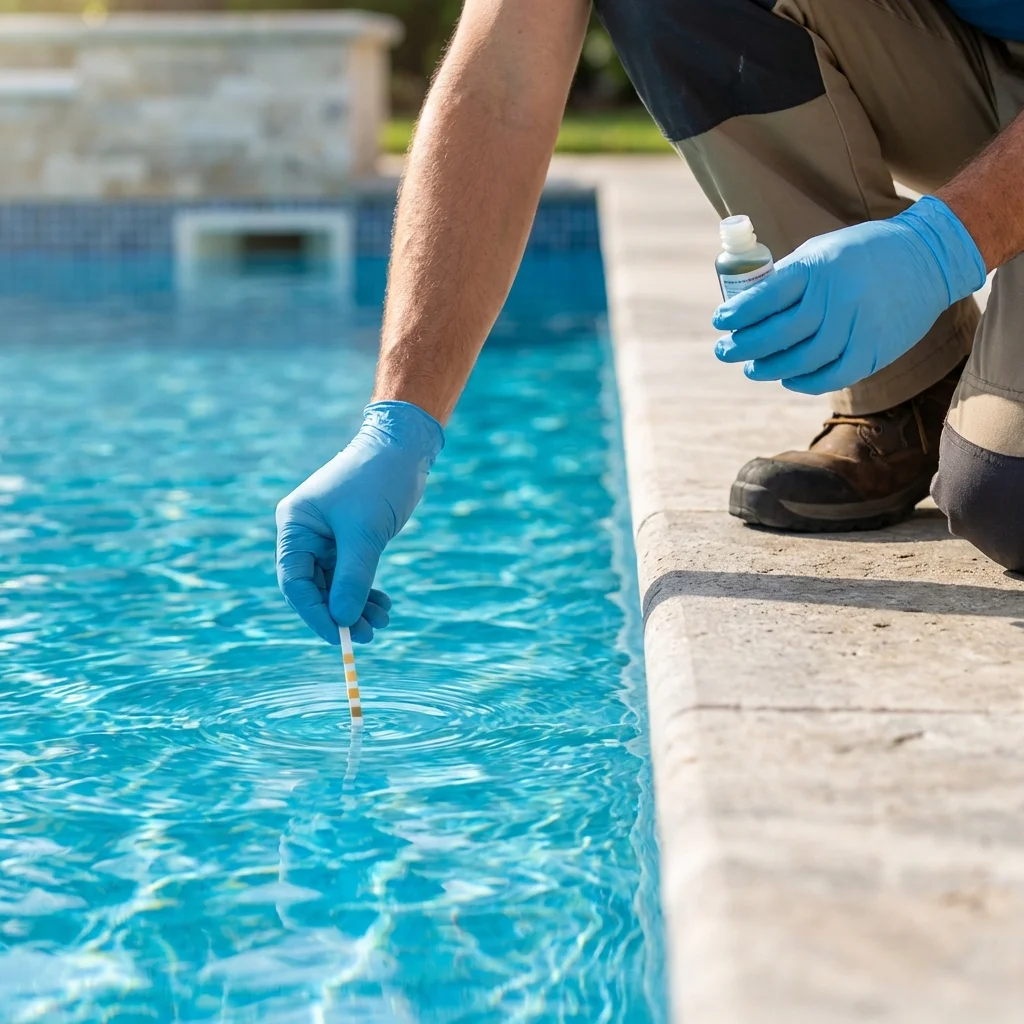
- Test and balance chemicals two to three times per week
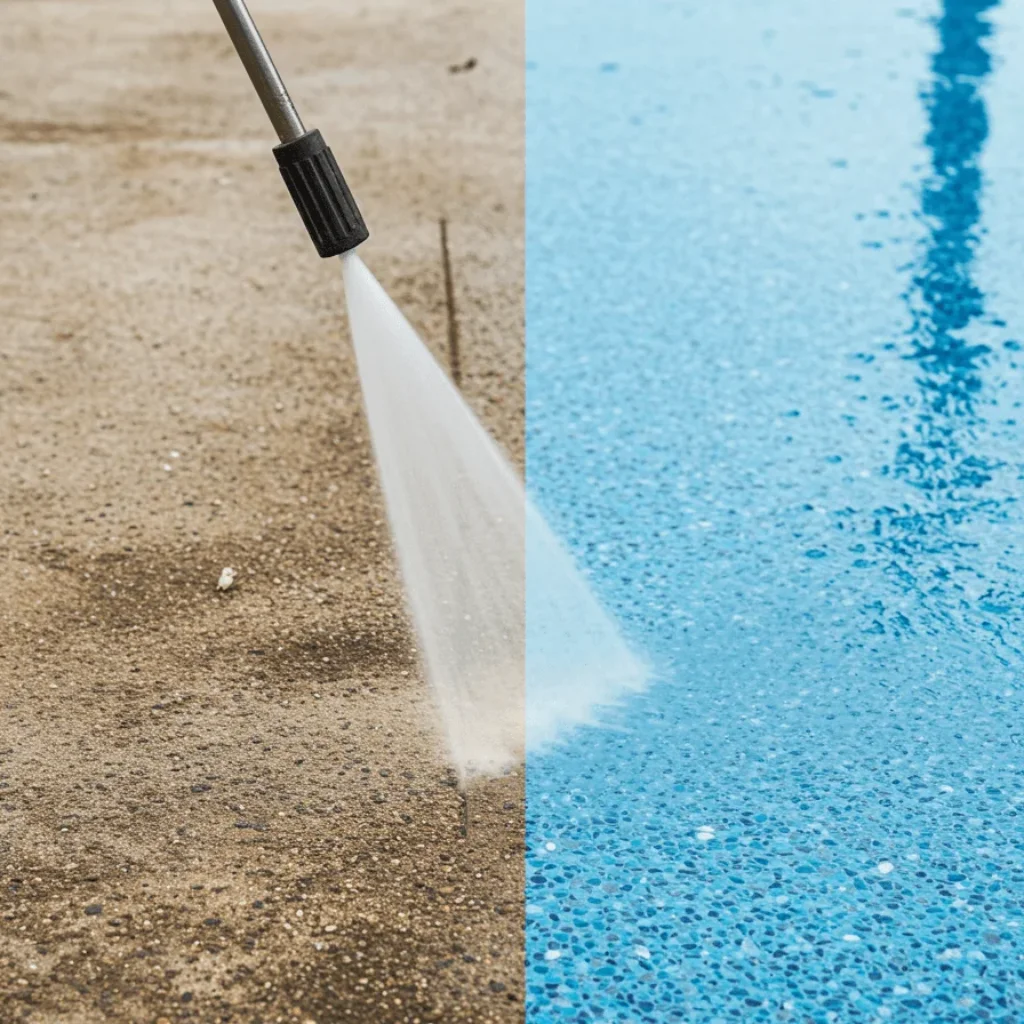
- Acid wash every three to five years to remove calcium and staining (see the acid wash pool Sydney guide)
- Professional clean and inspection annually
- Resurface every 10 to 15 years for pebblecrete, or repaint every 5 to 8 years (read how long pool paint lasts)
Fibreglass pool maintenance:
- Wipe walls occasionally but less scrubbing needed due to smooth surface
- Test and balance chemicals once to twice per week
- Clean waterline regularly to prevent buildup
- Professional inspection annually
- Resurface gelcoat every 15 to 20 years
For ongoing surface care after renovation, the pool resurfacing maintenance guide covers both pool types.
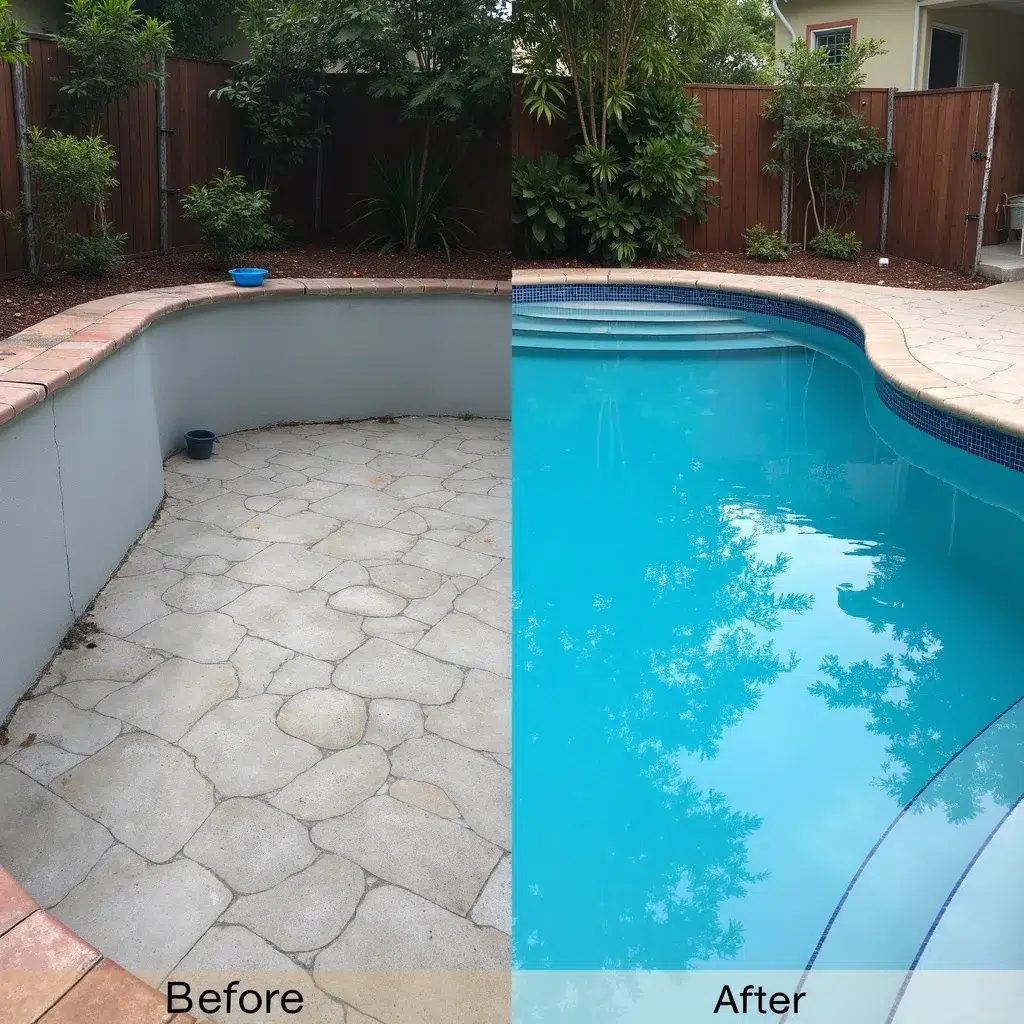
Renovation and Resurfacing Options
This is where concrete pools have a significant advantage. When a concrete pool needs renovation, you have extensive options:
- Pebblecrete resurfacing for a durable, textured natural stone finish
- Pool rendering for a smooth rendered interior
- Pool painting with epoxy for a budget-friendly cosmetic refresh
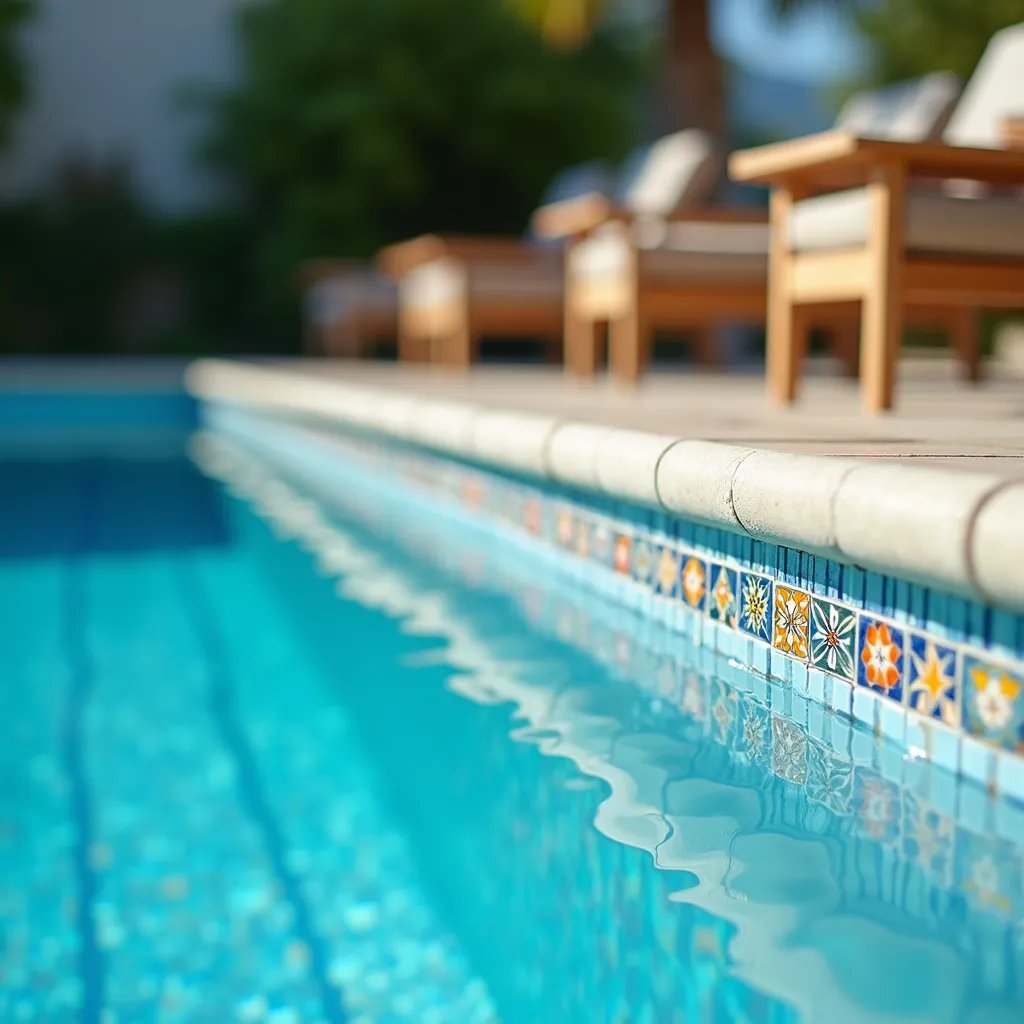
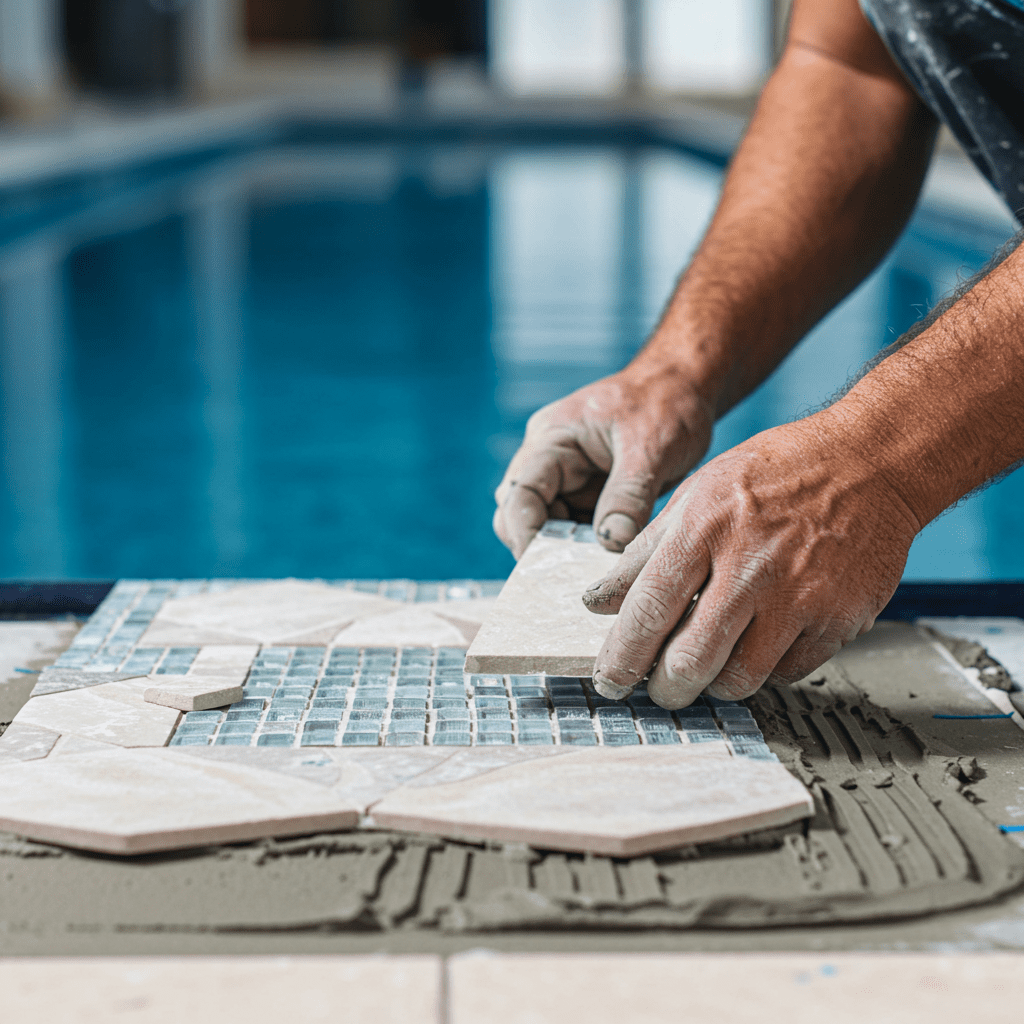
- Pool tiling for a premium fully tiled interior
- New waterline tiles and coping replacement
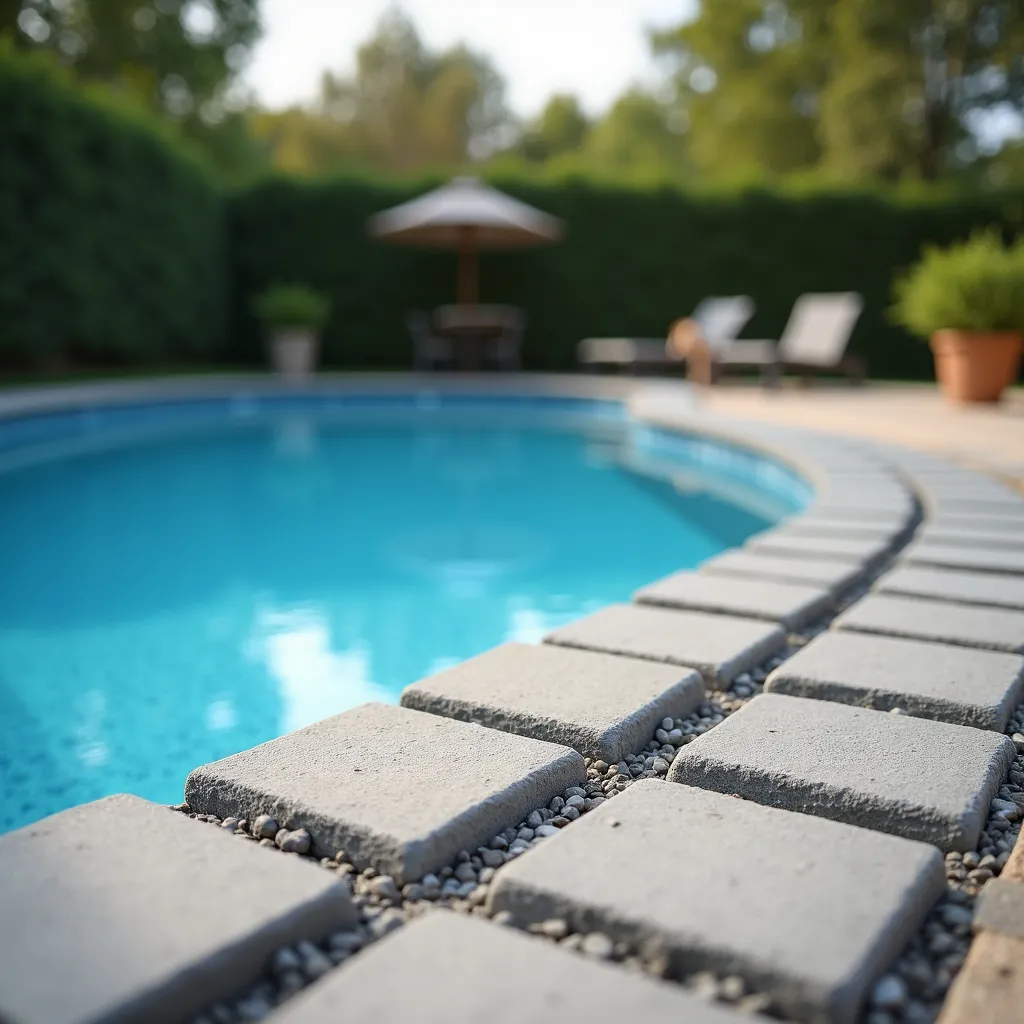
- Pool surrounds and paving upgrades
- Adding features like ledges, steps, or spa jets
Fibreglass pool renovation options are more limited:
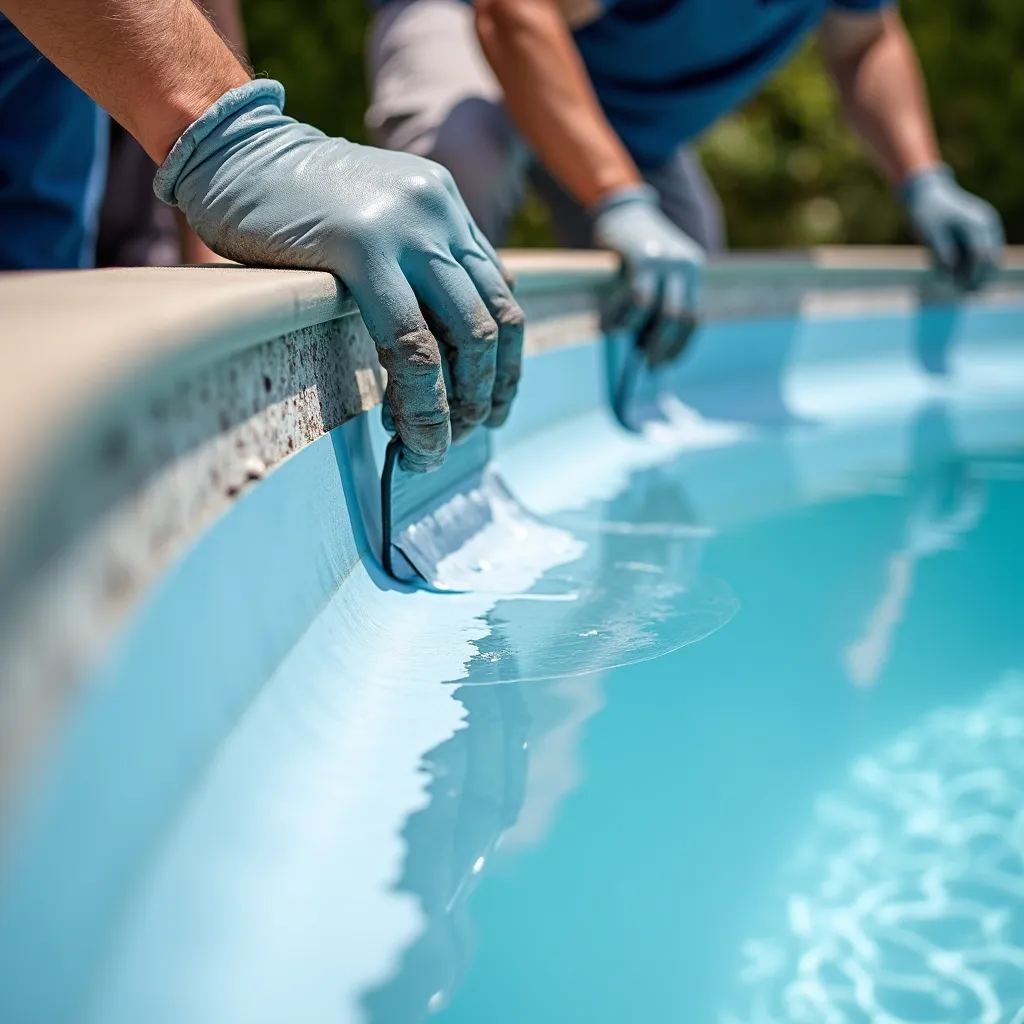
- Gelcoat resurfacing to restore the smooth, glossy finish
- Fitting replacement (jets, lights, skimmer)
- Waterline tile addition or replacement
- Surrounding hardscape upgrades
You cannot easily reshape a fibreglass pool, add depth changes, or tile the interior the way you can with concrete. For homeowners wanting a complete transformation, concrete pools offer far more scope. Browse the project gallery to see what is possible with both pool types.
Which Pool Type Is Better for Sydney?
There is no single right answer. It depends on your priorities.
Choose concrete if:
- You want a custom shape, size, or depth that does not exist as a standard fibreglass mould
- You are building a large pool (longer than 12 metres)
- You want a fully tiled or pebblecrete finish
- You plan to add features like a spa, wading ledge, or infinity edge
- You value long-term renovation flexibility and are comfortable with higher maintenance
Choose fibreglass if:
- You want faster installation with less construction disruption
- You prefer lower ongoing maintenance and chemical costs
- You are happy with a standard shape and size
- You want a smooth, algae-resistant interior surface
- You want a lower upfront cost
For homeowners who already have either pool type and are considering renovation, a professional pool inspection determines exactly what your pool needs and what options are available. Understanding pool renovation costs helps set realistic expectations.